
News & Updates
Check out the latest from Sudan and our movement
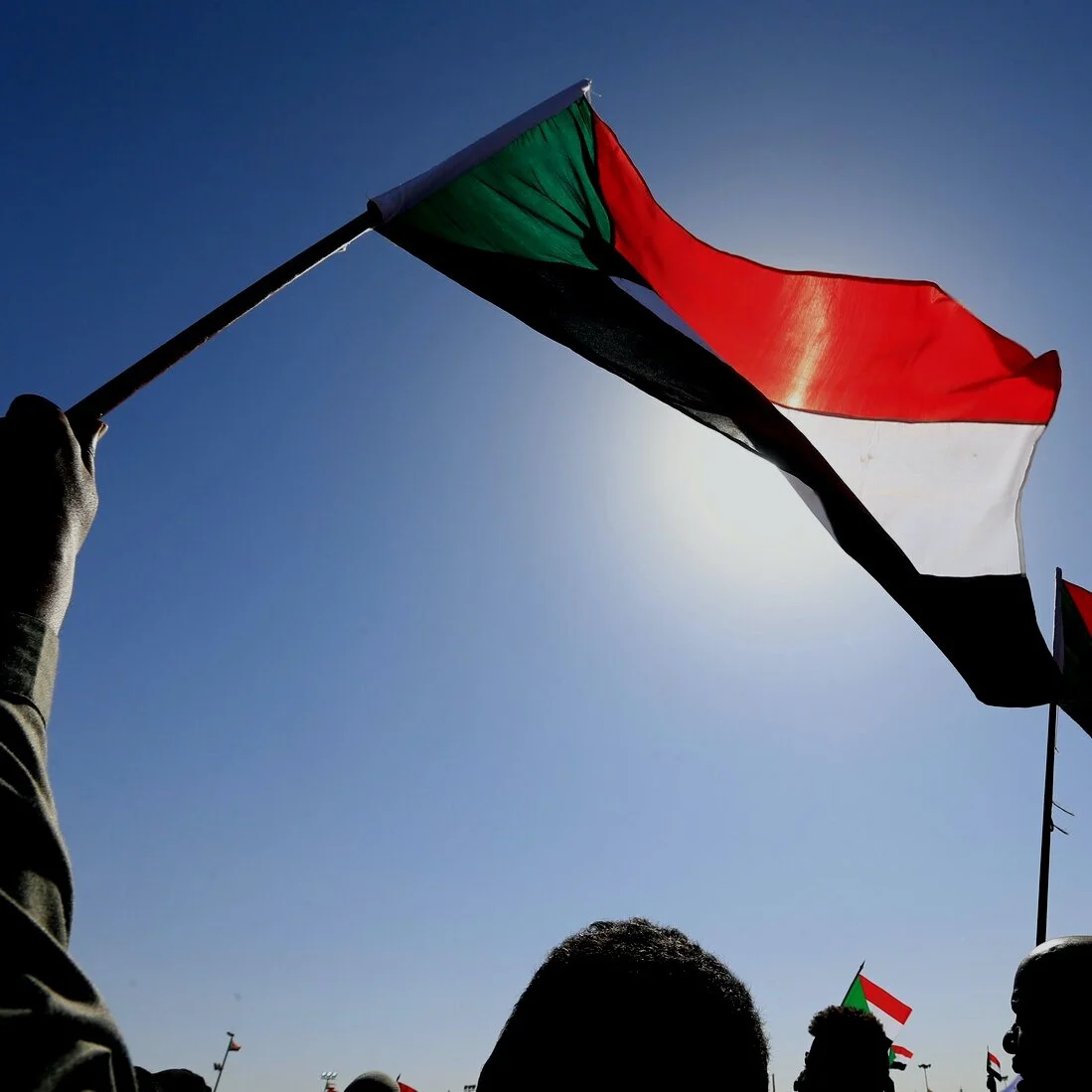
Watch Sudan On June 30
June 30 will mark a pivotal and grim milestone in Sudan's history: 30 years of disastrous militarized, Islamic rule that has seen millions of Sudanese murdered and displaced, an economy in free fall, and a seething civil society that is just over all of it.
June 30 will mark a pivotal and grim milestone in Sudan's history: 30 years of disastrous militarized, Islamic rule that has seen millions of Sudanese murdered and displaced, an economy in free fall, and a seething civil society that is just over all of it. This June has also marked 8 years of the regime's genocidal violence and humanitarian blockade in the southern Nuba Mountains region, where the majority of of our work is focused.
Earlier this week, Ismail al-Tag, a spokesman for the venerable Sudanese Professionals' Association, called for mass marches on June 30 to demand that the Military Council hand over power to civilians. This comes only weeks after the Military Council massacred and raped protesters in Khartoum, an atrocity that claimed over 100 lives, led to hundreds more Sudanese missing, and plunged the country into an internet blackout. And it comes on the heels of the junta rage rejecting yet another proposal to hand over power to civilians.
The call for renewed mass protests seems to be working. Over the past several days, small night protests in cities across Sudan have reemerged, are growing in size, and are spreading into daylight hours. Activists are finding creative ways to organize around the internet blackout. And protesters know exactly who they are up against and what the Military Council is capable of.
With June 30 only a few days away, the faltering diplomatic effort to intervene in Sudan needs to ramp up and finally meet the reality of the situation. There is a real threat that the Military Council will unleash its Rapid Support Forces attack dog once again on unarmed and peaceful protesters demanding their basic rights. American diplomats need to make it clear that any additional violence will lead to the United States going after Military Council leaders in a very personal way. That should include declaring the Rapid Support Forces a terrorist organization, travel bans, international asset seizures, targeted sanctions, and more. It is past time for the U.S. government to move from platitudes about supporting protesters to firm action to help protect Sudan's besieged pro-democracy and peace movement.
Sudan's revolution is far from over. On June 30, we will learn just how far recent junta crimes have set back Sudan's massive peaceful protest movement. If you would like to directly support the Sudanese people as they seek a better future, discover ways to do so below.

The people of Sudan are overcoming two of the greatest challenges facing humanity today: war and genocide. Operation Broken Silence is accelerating their ability to generate lasting change by funding storytelling and movement-building, education and emergency response, and grassroots advocacy programs. Here are a few ways you can join us:
1. Give Monthly To The Education In Yida. The Renewal is our unstoppable family of monthly givers who never stop fighting for change. They give automatically each and every month to the two schools we sponsor in Yida Refugee Camp, providing consistent support to 24 teachers and nearly 1,100 students from the Nuba Mountains. Right now, the schools are short about $2,500 in monthly funding. LEARN MORE »
2. Become A Fundraiser. If you can’t give monthly right now, you can start an online fundraising page for the schools in Yida. BECOME A FUNDRAISER »
3. Give Once. Not ready to commit with a monthly gift or fundraising yet? That’s okay, making a one-time gift is the best next step to get your feet wet! GIVE HERE »
Sign up for our email list to get updates from Sudan and our movement. You can also follow us on Facebook, Twitter, and Instagram.
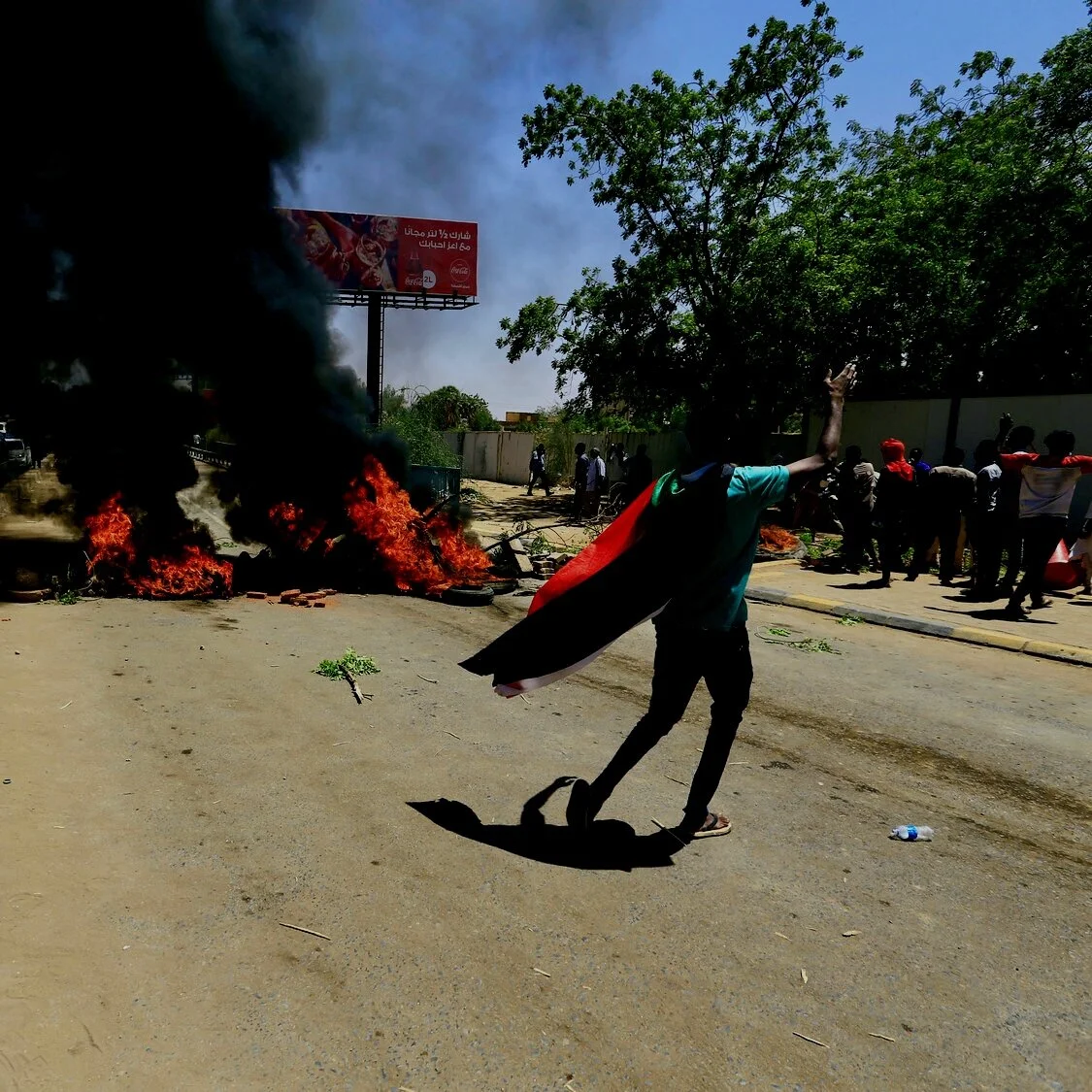
Reporting From The Heart of Sudan's Revolution
In a beautiful segment for Sky News, three reporters look back on their time in Khartoum before the June 3 massacre.
Before the June 3 massacre in Khartoum, a number of international reporters were able to share stories from Sudan in a way that had been impossible only a few months earlier. Many of them provided a rare glimpse of what Sudan's future could be as a new generation rises up: more secular, westward-looking, and peaceful.
In a beautiful segment for Sky News, three reporters look back on their time in Khartoum before the massacre. They talk about their experiences with the Sudanese people through the ups and downs and how much of the international analysis around Sudan's current moment is incorrect. Sudan's current revolution is not an extension of the Arab Spring; on the contrary, it is a political and social experience that could only happen in Sudan.
The above segment is also a great review of what has happened in Sudan since protests began in December 2018.
The people of Sudan are overcoming two of the greatest challenges facing humanity today: war and genocide. Operation Broken Silence is accelerating their ability to generate lasting change by funding storytelling and movement-building, education and emergency response, and grassroots advocacy programs. Here are a few ways you can join us:
1. Give Monthly To The Education In Yida. The Renewal is our unstoppable family of monthly givers who never stop fighting for change. They give automatically each and every month to the two schools we sponsor in Yida Refugee Camp, providing consistent support to 24 teachers and nearly 1,100 students from the Nuba Mountains. Right now, the schools are short about $2,500 in monthly funding. LEARN MORE »
2. Become A Fundraiser. If you can’t give monthly right now, you can start an online fundraising page for the schools in Yida. BECOME A FUNDRAISER »
3. Give Once. Not ready to commit with a monthly gift or fundraising yet? That’s okay, making a one-time gift is the best next step to get your feet wet! GIVE HERE »
Sign up for our email list to get updates from Sudan and our movement. You can also follow us on Facebook, Twitter, and Instagram.
Movement Spotlight: Tennessee Governor's School Students
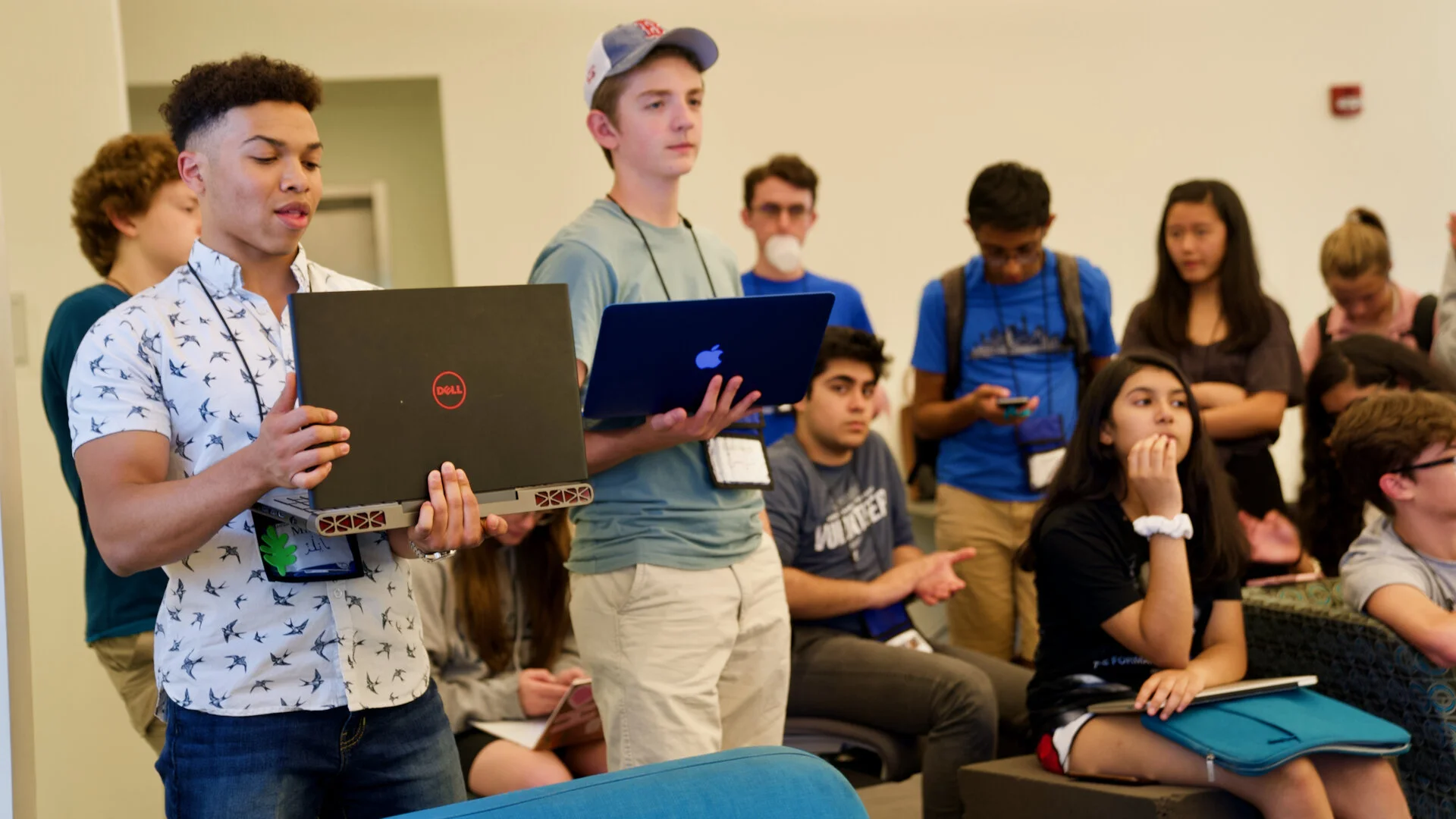
The University of Memphis serves as the host of the Governor's School for International Studies, which takes place on the UofM Campus each year during the month of June.
The University of Memphis serves as the host of the Governor's School for International Studies, which takes place on the UofM Campus each year during the month of June. Some of the brightest high school students from across the state of Tennessee participate in this program each year, and our organization serves as the nonprofit parter for the student's service days.
This year our staff spent the evening of June 20 with the students having an open discussion about the crisis in Sudan and how they could be involved. Going into June 21, the students brought their newfound passion for the Sudanese people and their creativity into the campaign design process.
This year, the students split into two groups and focused on the following campaigns for our organization:
1. Refreshing the Heart of Nuba fundraising campaign
2. Creating two statewide advocacy campaigns for a House resolution and Senate resolution, both of which focus on the ongoing and most recent crisis in Sudan that began in December 2018.
Following a morning of working on these three campaigns, the students spent the afternoon participating in them.
The fundraising team focused their efforts on the Heart of Nuba Campaign. We've been running this campaign since late 2016 and campaign has received only minor updates the last few years, so it was due for a major overhaul. The students watched the Heart of Nuba film about the hospital before diving into redesigning fundraising and donation pages.
The advocacy group focused their efforts on two new Congressional resolutions:
House Resolution 432: Condemning the attacks on peaceful protesters and supporting an immediate peaceful transition to a civilian-led democratic government in Sudan
Senate Resolution 188: A resolution encouraging a swift transfer of power by the military to a civilian-led political authority in the Republic of the Sudan, and for other purposes
Both resolutions do similar things: legally-speaking they are non-binding, but they do pile on pressure against Sudan's ruling junta, bring more awareness to the situation in Sudan, and push for needed changes in U.S. foreign policy.
The students reviewed both resolutions and designed state-wide advocacy campaigns for each one. They made call-scripts, email templates, and social media images for sharing.
Following their hard work on these three campaigns, the students had an opportunity to pilot their designs together!
First, the students called their Senators and respective Representative about H.Res 432 and S.Res 188. They scored an early victory and received word that Congressman Steve Cohen of Tennessee's 9th District was becoming a cosponsor! Most other calls went well, but have not yielded results as of the time of this post.
The only negative response we received was from Senator Lamar Alexander's Nashville office. His staff was incredibly combative and irresponsible, hanging up on constituents and accusing one of the students of being paid to call. Not cool Senator.
Next, the students created a Heart of Nuba fundraising team and their own individual pages to ask their friends and family to get involved. 90 minutes of live fundraising led to over $6,000 being raised for Mother of Mercy Hospital!
In the coming weeks, these new and improved campaigns will be further tweaked by our staff and pushed out to our movement. We want to thank Governor's School and the University of Memphis for inviting us to work with the students for another year. They all have bright futures ahead of them, and we are excited to be able to educate them on important global issues.

Movement Spotlight: Shwetha Ganesh
A recent story from our movement.
Operation Broken Silence may be a small organization, but with the help of our awesome movement, we’re able to make big waves to empower the people of Sudan. Some of the most involved and enthusiastic members of our movement can be found across the country!
Shwetha Ganesh is a student at the University of Southern California and serves as the Finance Director for Model United Nations of Southern California. We first met her in 2017 when she was a high school student participating in Tennessee Governor's School For International Studies. She says:
"I am in college at the University of Southern California on the other side of the country from Memphis. I'm part of the Model United Nations of Southern California (MUNSC), USC's premier MUN team. Our club hosts an annual high school conference, Southern California Model United Nations (SCMUN). We have a cause every year, meaning we choose an NGO, non-profit, or other organization that is doing humanitarian work on an international level, reflecting the nature of the conference. for the delegates attending to donate towards. As the Director of Finance of our club, I was tasked with choosing which organization we wanted to feature. Remembering my experiences with OBS, I knew that this was a great opportunity for not only OBS but also for our club to contribute to something meaningful.
I think it is important to remind students of the greater purpose in participating in Model UN conferences. Many students often get caught up in the competition aspect, so I think it's valuable to ground them and show a cause in which international cooperation can truly make an impact. A lot of MUN competitors are often international relations majors or something of the likes, so the lessons that they learn in the classroom and through MUN will help them create a lasting impact on the world."
Shwetha and her Model UN peers asked us for some help to introduce our cause and Sudan to the high school students. She says:
"We asked OBS for a few videos and promotional content that we could show to each committee. We made a brief presentation that included two videos- one featuring the education program in Yida Refugee Camp, and the other the trailer for the Heart of Nuba film about the hospital. During the conference, we went into each room and showed our presentation to the high schoolers. Going in, we had to understand that high schoolers don't have jobs or a source of income apart from what their family/guardian gives them, so we have to work within those limits. We placed a mason jar in each committee room and every few hours, we would check the jar to see how much progress we had made and encouraged people to donate. Towards the end of the conference, we set up incentives to donate such as having the committee chairs sing a song or do a dance or even get pied in the face (all of which happened). Our initial goal was to raise $1,000 dollars, and we were ecstatic that we exceeded."
Shwetha's conference had an incredible turnout and raised over $1,600 for the Endure Primary and Renewal High Schools in Yida! Thank you to Shwetha and her peers for using your talents and community to empower Sudanese students and teachers!
Whether your are part of a campus group or just want to get some friends together to host an event, you can email me at atetzeli@operationbrokensilence.org and I can help you get started!

Blue For Sudan? Learn More & Get Involved
Sudan has gone global like never before. Here’s what you need to know and how you can help.
If you are looking for answers to what is happening in Sudan and for ways to help, you've come to the right place. Read on to learn about the massacre of Sudanese protesters in Khartoum on June 3, as well as ways you can help.
On June 3, regime forces opened fire on unarmed protesters in Khartoum. Here at Operation Broken Silence, we have been warning for months that this crisis was coming. While this massacre was not unexpected, it is still unimaginably horrifying.
The military junta ruling Sudan has shut off the country’s internet. It is likely to be off for at least a few weeks. Information on what is happening on the ground in Sudan is already at a trickle. But here is what we do know.
Early on the morning of June 3, regime paramilitary units belonging to the murderous Rapid Support Forces and National Intelligence and Security Service launched an attack on the main protest encampment outside of the military headquarters in Khartoum. There are reports of mass murder, rape, and pillaging.
Only moments after the massacre began, large contingents of armed paramilitaries spread out across the capital, murdering more Sudanese civilians and placing Khartoum on lockdown. There are also reports of attacks on protesters across the entire country.
The government massacre and the #BlueForSudan hashtag has brought worldwide attention to this latest crisis unfolding in Sudan. Operation Broken Silence has been working in one of the most oppressed parts of Sudan, the Nuba Mountains, for 8 years. We come alongside of Sudanese changemakers and help them tell their own stories through film and photography. We use these stories to raise support for Sudanese-led education and healthcare programs. We focus on helping the Sudanese drive forward their solutions to their problems.
For millions of Sudanese living in the war-torn edges of Sudan, the regime massacre in Khartoum is not a new experience. It is life as usual. For some quick context into why the situation in Sudan is so bad, check out our Why Sudan? page.
If you are looking for tangible ways to support the Sudanese people right now, you’ve come to the right place. Here are specific ways to change and save lives right now in Sudan:
Operation Broken Silence sponsors the high-performing Endure Primary and new Renewal Secondary Schools in Yida Refugee Camp. We support 24 brave teachers who work here. They oversee nearly 1,200 students and orphans a day. These schools are the only stable place for children who have grown up only knowing war and genocide. Empower them to seek a brighter future:
Finally, Share This Post
We know there are a lot of other people looking for answers to what is happening in Sudan right now. After you get involved, could you share this information with your friends? Just grab the link below, share it on Facebook and Twitter and add it to your Instagram profile, and then ask people to join you.
https://www.operationbrokensilence.org/blog/blue-for-sudan-learn-more-get-involved
If you aren't sure what to write with any of your messages, feel free to copy/paste this:
Over the past few weeks, the military regime in Sudan has been committing another massacre. I'm joining the fight to directly support the Sudanese people and need you to join me: https://www.operationbrokensilence.org/blog/blue-for-sudan-learn-more-get-involved
And feel free to grab the blue photo below to share online. Unfortunately there are a number of scams online trying to get people to donate to fake things or follow them. Our friends in Sudan need our direct support now more than ever before. We need people to get involved at the right places and in the right ways. Let's roll.
Terror In Khartoum
The Sudanese regime has just committed a massacre of unarmed protesters in Khartoum. Here’s everything that we know so far.
This morning, Sudan's ruling junta committed a massacre against unarmed and peaceful protesters in Khartoum.
More details will emerge in the coming days; however, due to the sheer horror of the crimes being committed, we want to provide you with what we know and some additional context around the slaughter. Most internet in Sudan has been cut off by the junta as part of their efforts to block international coverage of the massacre. Our hope is that we can help prevent that effort from being successful.
Much of the information below has been published by other reliable sources in the past 72 hours and, in those cases, we have provided links to the original reporting. Some of what follows is newer information that has been privately reported to our organization or has not been made public in any meaningful yet.
We do warn you, the following information and images are extremely graphic and disturbing.
The Lead Up To The Massacre
Mass protests have occupied the street in front of the military headquarters since April 6, only days before Sudanese dictator Omar al-Bashir was overthrown by his own junta after nearly 30 years in power. The junta rebranded themselves as the Transitional Military Council (TMC) and promised to work with protesters to move the country toward civilian rule. That promise ended up being a colossal lie.
The junta remains fundamentally unchanged: violent, racist, and corrupt. The TMC only offered vague steps and dragged their feet in negotiations with civil society leaders. Wary protesters fed up with violent and corrupt military and Islamic rule refused to go home until their demands were met.
On Sunday, it became clear that the regime's ultimate plan had been to wait the protesters out and not cede an inch of power. TMC leaders finally lost patience. Army units quietly withdrew from the nearby streets and the main gate to their headquarters, only to be replaced moments later by the junta's genocidal Rapid Support Forces (RSF) militia. On Monday morning, the massacre began.
Hundreds of Rapid Support Forces militiamen and National Intelligence and Security Service agents marched on the sit-in protest at the army headquarters and began firing live ammunition and throwing grenades. The troops burned tents and beat the wounded and those who could not flee fast enough. Eyewitnesses reported that RSF militiamen grabbed several women and took them back to their vehicles to be raped.
A photo circulating online reportedly shows Rapid Support Forces militiamen showing off the underwear of women they raped during the attack.
The army refused to let protesters enter their headquarters or provide any sort of protection from the junta's security forces:
#SupportSudan A video showing Sudan Army land forces preventing revolutionaries from entering its premises when they tried to seek refuge from gunfire @BBCWorld @GlobalTV @The_EastAfrican @MiddleEastEye @guardian @washingtonpost @IndiaToday @AFP @TheEconomist @allafrica @Reuters pic.twitter.com/D6J37Mme4r
— SUPPORT SUDAN (@All4Sudan) June 3, 2019
Other RSF and NISS units reportedly scooped up the wounded and put them into ambulances in a failed attempt to make it look like they were trying to help. The bodies of protesters already murdered were thrown into their own vehicles. We now know that dozens of the wounded and dead bodies were taken to the Nile River nearby. RSF units killed the wounded with their firearms and machetes and mutilated the bodies of those already killed before dumping them into the river. Some bodies had stones tied to their legs so they would not rise back up to the surface.
احد الشهداء الذين تم انتشالهم من النيل ضاحية الفكي هاشم#مجزره_القياده_العامه pic.twitter.com/qvUlD8lpiY
— 🇸🇩 DiGnO #السلطة_المدنية_الانتقالية (@Digno1994) June 5, 2019
The protest site outside of the military headquarters had been a vibrant place that was full of life the past several weeks. Following the initial massacre, all that remained were torched vehicles and tents.
The former sit-in site in front of Army HQ pic.twitter.com/q6Hn8Tct47
— Cameron Hudson (@_hudsonc) June 3, 2019
There is not much video of the massacre itself yet. Most of what has made it online can be found in the Al Jazeera video at the top of this post. Protesters have been uploading endless amounts of video and photos to social media platforms for several weeks to document their stories, but the junta has cut off most internet in Sudan since the massacre. Whenever internet returns, we expect to see more video and photo evidence from the massacre emerge.
The RSF has also been robbing civilians of their cell phones across Khartoum. The RSF has a long history of violently stealing from ordinary Sudanese across the country for their own personal gain; however, this appears to be an attempt to keep protesters from getting information about junta crimes out into the world.
The RSF Spread Terror Across Khartoum
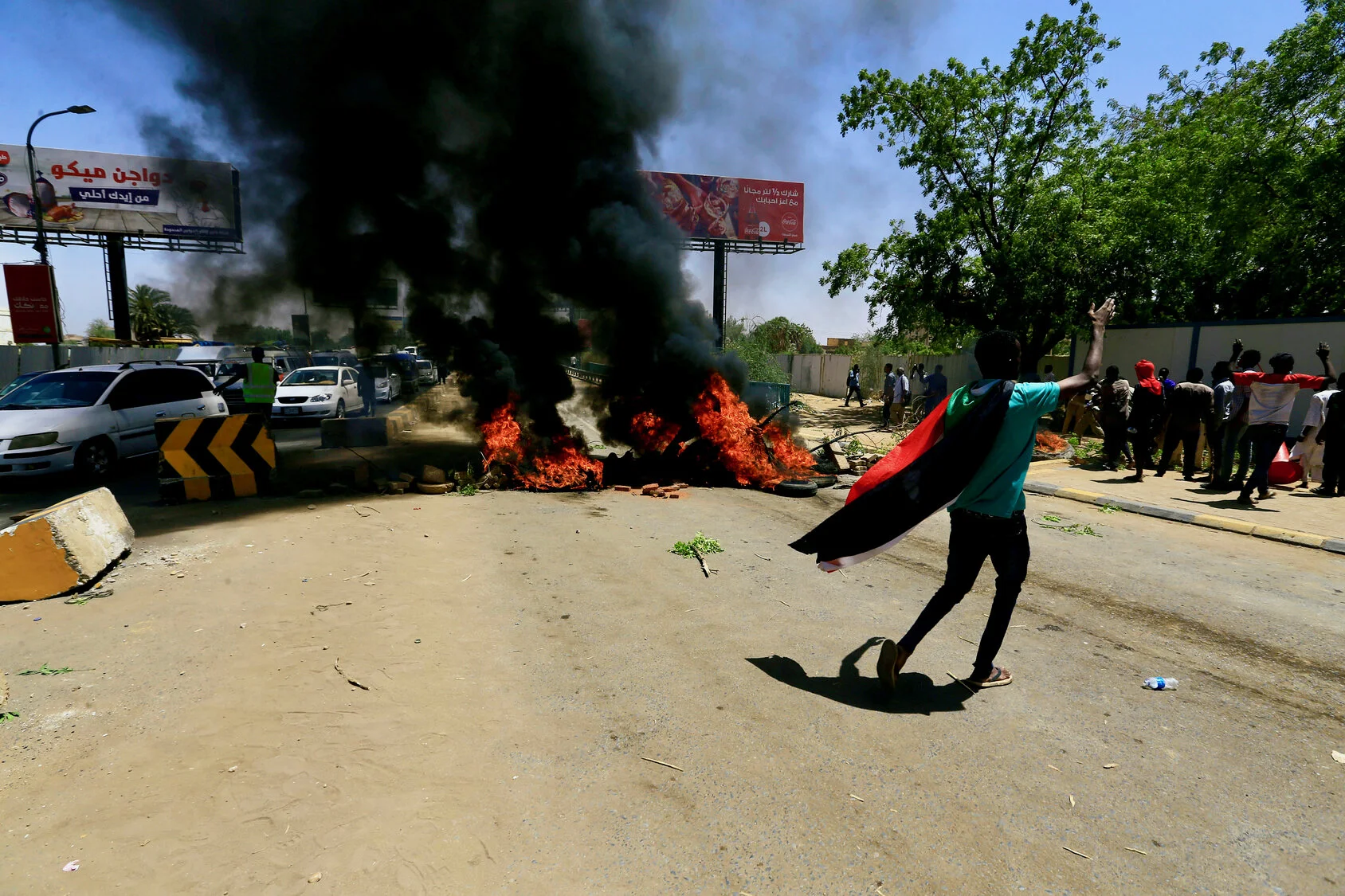
Following the initial massacre outside of the army headquarters, heavily armed RSF units chased fleeing unarmed protesters into side streets and residential neighborhoods. They were met with makeshift blockades and protesters moving vehicles into the middle of roads to block RSF movements. RSF units have continued beating, raping, and shooting protesters across Khartoum since Monday. The city has been described as "on lockdown" with RSF units killing, raping, and beating protesters and shopkeepers at will.
The Janjaweed are on the streets of Khartoum attacking civilians with live amunition
— Sudanese Translators for Change STC (@SudaneseTc) June 4, 2019
Sudan have witnessed total internet blackout since yesterday to hinder posting updates about brutal violence occuring#Internet_Blockout_in_Sudan#TMC_violations#SudanUprising pic.twitter.com/ot4vMTulE5
RSF units have also surrounded hospitals and clinics, which have been overrun with survivors and the protesters who have brought them in. RSF soldiers entered East Nile Hospital and opened fire on doctors and survivors. At Royal Care Hospital, the RSF threatened the staff and forced over 50 wounded to leave without medical care.
Yesterday, we received a private report from Khartoum that includes the names of several dozen rape survivors. Because we do not personally know the survivors and to protect their identities, we will not be releasing their names. We can say that there are several children among the survivors, including an 8 year old girl. There are at least 4 cases in which daughters and wives have been raped in front of their fathers or husbands, who were forced to watch by RSF soldiers.
The death toll has skyrocketed in recent days. As of the time of this posting, most international coverage is reporting that between 30-65 people have been killed and several hundred wounded. The private report we have received states that well over 100 people have been murdered and more than 1,000 peaceful protesters injured. Several hundred more Sudanese citizens are missing and presumed to be dead or locked up in the junta's vast network of torture chambers.
Why & How Is A Government Militia Calling The Shots
The Rapid Support Forces militia is a rebranded, better armed, and better trained version of the Janjaweed, the notorious regime militia that committed the bulk of the Darfur genocide in the 2000s. Several years ago and while Bashir was still Sudan's sitting dictator, his regime formalized the Janjaweed into a mobile and effective fighting force and spread the militia across Sudan's oppressed periphery regions. The regime dubbed the Janjaweed as the new Rapid Support Forces.
The RSF have been committing war crimes including mass murder, rape, and looting ever since. From Darfur to the Nuba Mountains to Blue Nile, RSF units have burned entire communities to the ground and battled armed rebels in the western and southern regions of the country. They have historically been mercenaries hired by the junta to decimate Sudan's already oppressed and rebellious hinterlands.
When peaceful protests against Bashir broke out in Khartoum in December 2018, the junta quietly began moving thousands of RSF units out of the besieged periphery regions of Sudan and into the capital. Where there is any form of rebellion against the regime in Sudan, the RSF usually arrives soon afterward to repress it. The Transitional Military Council restrained the RSF after seizing power from Bashir in April, but no more.
On Monday, the junta unlocked the shackles so RSF paramilitaries could do what they do best: slaughter the people and allow the military to claim they had nothing to do with the violence.
The regime has brought its genocidal wars to the capital, the very place it has long said it is fighting to protect and enrich. The RSF is unleashing its own violent culture on Sudanese who have never known it, and they seem to gleefully embrace the opportunity to show citizens in Khartoum, who have no experience with the wars and genocides of the past 30 years, what life has been like outside of the Khartoum bubble.
What Happens Next
For now, it appears that RSF commander Hemeti is trying to position himself to be Sudan's next dictator. Hemeti is technically second-in-command on the Transitional Military Council, but many Sudan observers have become immensely worried the past few weeks that he is the one pulling the strings or he is operating outside of TMC authority. Hemeti has the backing of powerful Gulf states, and the RSF has its own relations with several international actors that goes beyond official Sudanese government foreign policy.
The RSF's true size and strength is largely unknown, but Hemeti's units lack the heavy firepower of the official army, which has an array of tanks, artilllery, and more at its disposal. If there is ever a showdown between the Sudan Armed Forces and the RSF, a nightmare scenario that is increasingly likely to happen, it is highly probable that the army will enter the fray with a lot more firepower.
On the international front, the usual actors who have long supported mass murder and chaos in Sudan for their own gain are lining up behind the junta. The Russian and Chinese governments have blocked a U.N. Security Council statement condemning the violence. Saudi Arabia and the UAE are pouring money into regime coffers. And Egypt's military leaders remain opposed to civilian rule on their southern border.
The Trump Administration has mildly thrown verbal support to the protest movement; however, there is no clear policy in place. In fact, the American approach to the current crisis in Sudan can only be described as a dumpster fire. At a recent private meeting in Washington D.C, Steven Koutsis, the top ranking American diplomat in Khartoum, attempted to assuage concerns about U.S. policy toward Sudan. Attendees left with even more concerns, and much of what Koutsis said was directly contradicted by U.S. Assistant Secretary of State Johnnie Carson shortly afterward. Three other American officials have admitted the U.S. government is struggling to get basic intelligence about what is happening inside Sudan’s government and information on different political actors. Other U.S. officials have made it clear the Trump Administration has no policy on the current crisis whatsoever.
That leaves the Sudanese people themselves. While Khartoum is on lockdown due to the Transitional Military Council's Rapid Support Forces attack dog being unchained, there are early signs that this massacre is going to backfire. Protesters have been unable to reclaim their positions outside of army headquarters, but they continue to stand their ground in residential areas of the capital. Protesters have not retreated in other parts of Sudan either, despite RSF attacks.
For many Sudanese, protesting despite the immense dangers is the only option the Transitional Military Council has left them with. The junta has spent the last 30 years wrecking Sudan's economy, stealing from government coffers, shrinking public services, and committing unaffordable and pointless genocides in the name of a crazed, violent ideology that doesn't help anyone. Most Sudanese only have the breath in their lungs left to lose, especially now that the horrors of Sudan's war-torn edges have entered the capital.