
News & Updates
Check out the latest from Sudan and our movement

Famine descends on Sudan, 2.5 million people could die from hunger by September 2024
Extreme violence, aid blockage, depleted harvests, and soaring prices have created the largest emergency in the world.
The greatest humanitarian emergency of our lifetime is unfolding in Sudan.
Almost no one has noticed, and time is running out.
•••••
When gunfire and explosions erupted in Khartoum in April 2023, it was clear that Sudan’s merciless generals would give no quarter to the Sudanese people. Fighting between the army and paramilitary Rapid Support Forces (RSF) quickly spread across the country. So did the war crimes, which has given way to a full-blown genocide in Darfur perpetrated by the Arab-dominated RSF against the region’s ethnic African minorities. Gruesome images of mass executions, beheadings, and bodies left to rot in the streets have trickled out of Sudan ever since.
Indeed, this living nightmare is just as much a total war on Sudan’s diverse, beautiful citizenry as it is a battle for power between two of the most barbaric armed forces in the world. Fourteen long months of extreme violence has displaced 11 million people. Over 20 million children can no longer attend school and most farmers cannot work. Over 70% of Sudan’s healthcare system has been knocked offline, and the medical facilities that remain are overwhelmed and underfunded. Communication networks are collapsing, further hampering the Sudanese people’s efforts to get information out to the world.
As month after month has slipped by with no end in sight, food has become more and more scarce. A perfect storm of the army and RSF blocking humanitarian aid, extreme violence, depleted harvests, soaring prices, and a near criminal lack of international attention has brought Sudan to the brink of an unfathomable humanitarian catastrophe.
Almost 18 million Sudanese —one third of the entire country— are facing severe food insecurity. And, according to a new report, 2.5 million of those most at risk could perish from hunger over the next three months.
The Clingendael Institute, a Hague-based think tank on international affairs, recently released “From hunger to death: An estimate of excess mortality in Sudan, based on currently available information.” The detailed report opens with a grim picture of what lies ahead:
“Using food balance estimates based on published data on harvest and stocks, and somewhat optimistic estimates of stocks at household level, wheat imports and humanitarian food aid, excess mortality was calculated under a number of scenarios. A scenario in which the hungriest people are given small amounts of extra food by others leads to an estimated excess mortality of about 2.5 million people (about 15% of the population in Darfur and Kordofan, which are likely worst affected) by the end of September 2024.
A tipping point at which large-scale hunger transitions into large-scale death has likely already been reached in parts of the country in May.”
The full report can be viewed here. It contains technical language that may be unfamiliar to the general public, so we have pulled forward some key points below that get to the essence of this crisis.
Famine is descending on Sudan. Here’s what the near future could look like.
According to the report, it is estimated that 90% of excess mortality will be concentrated among roughly 10% of the population. Spreading hunger will likely be worst in Darfur and Kordofan where food production and humanitarian efforts are abysmally low due to targeted violence, insecurity, and the blockage of aid. This implies that about 15% of the population in Darfur and Kordofan will die from hunger and disease by September 2024 if there are no rapid improvements in food availability. Seasonal rains are coming soon and will likely make all forms of transporting food aid very difficult by early July. The below map is helpful in visualizing all of this.
While the below classifications consider the severity of hunger, it is the duration of hunger that may need more attention. If food deficits are below what the body can adjust to for long enough, many people will die even though they do not fall into the category of “catastrophic hunger.” Simply put, one cannot survive at emergency levels of food consumption for a long time.

Photo: Map from the Famine Early Warning Systems Network (FEWS NET) showing how quickly Sudan is descending into famine.
Brave, informal community-level initiatives to share food and feed the hungriest households are increasingly precarious. If neighborhood “soup kitchens” face any uptick in harassment, money transfers being blocked by internet shutdowns, or food availability dwindling in markets, the number of people being served will reduce suddenly and drastically. And the lack of any sort of formal status of these groups means major international aid agencies are not working with them at scale.
While strengthening local mechanisms for food redistribution can make a real difference in the immediate future, it will neither be enough to stop hunger nor enough to avoid death in the longer term. All indications are that conflict, rising prices, and other challenges will lead to a below-average harvest in 2024, even if seasonal rains are good. There are also no indications that global imports of cereals —which feature heavily in the Sudanese diet— will return to pre-war levels anytime soon.
Unless there is a rapid, structural, and large-scale increase in the availability of food (i.e. a ceasefire and a massive humanitarian intervention) it can be expected that after a limited recovery immediately following an upcoming reduced harvest, the 2025 lean season will bring even worse hunger and death than this year will.

Chart: “Excess morality” is the number of deaths beyond what is expected under normal circumstances. (Clingendael)
A Few Notes From Us
For reasons beyond understanding, an official famine has not yet been declared, even though the few who are responding to this crisis are seeing hard evidence that the silent killer has arrived. Outgoing Under Secretary-General for Humanitarian Affairs recently said on June 4 that there is “a likelihood that five million people across the country [Sudan] could face famine. I don't think we've ever had that kind of number at risk of famine.”
This is no time to be cautious with our language. The famine is now here and, if something does not change soon, the next few months will provide ghastly evidence of this truth. Merely preventing the crisis from getting worse will lead to countless deaths. Hunger must be reversed if a complete death spiral is to be averted.
Sudan’s military elite are the driving force behind this crisis, but the international community’s refusal to hold them accountable and pursue less traditional ways of getting aid into the country in the interim is compounding the damage. This situation has been warned about for months. There was ample time for the world to get organized, creative, and aggressive in response. An effort to do so is only barely underway now, and small organizations like us are still overwhelmed with needs as we wait for the rest of the world to catch up.
That said, there are reasons to hope. The Clingendael report correctly points out that “even a modest redistribution of food to the hungriest people can substantially reduce excess mortality.” This is no long-term solution, but it does buy precious time that is running out. Time that ordinary Sudanese can use to escape the hardest hit areas or strengthen their own brave efforts to feed the most hungry. We ask that you join us in giving to that end, whatever you can spare.
How You Can Help
Operation Broken Silence is building a global movement to empower the Sudanese people through innovative programs as a 501(c)(3) nonprofit organization. For over a decade, we've allied people just like you with incredible Sudanese heroes on the ground. Your gift will help them continue their lifesaving work.
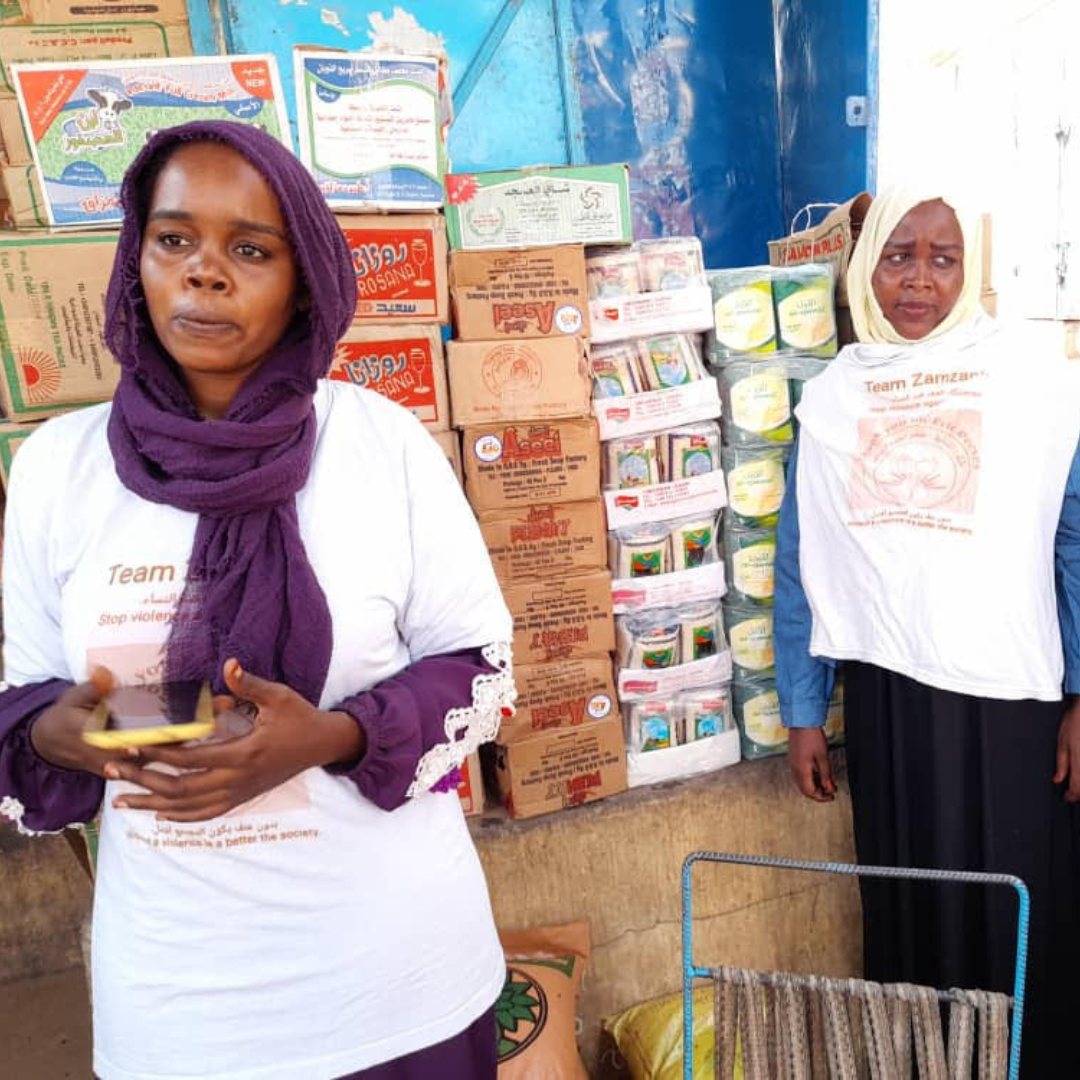
Team Zamzam in Darfur, Sudan - 20 female counselors serving victims of sexual violence and malnutrition in Zamzam displacement camp near El Fasher. They are distributing food to the disabled, the elderly, orphans, widows who have taken in children, and those with severe acute malnutrition. This is the area of Sudan most in need right now.

Refugee Leaders in Adré, eastern Chad - Experienced local healthcare and aid workers are running a small feeding program and two clinics to provide food and care to the most vulnerable, specifically the disabled and orphans. This is where many survivors of the Darfur genocide have fled. Rations have been cut in the camp due to a lack of funding.

Education Office in Juba, South Sudan - Our Nuba education partner has an office in Juba, where thousands of refugees from Darfur have arrived traumatized and hungry. Few have been able to secure refugee food benefits due to severe lack of international funding. Our partner is trying to provide basic food but has only 20% of the funding they need to do it.
Other Ways To Support These Heroes
Checks can be made payable to Operation Broken Silence and mailed to PO Box 770900 Memphis, TN 38177-0900.
Join Miles For Sudan, the new global event helping runners, walkers, and cyclists convert their miles into dollars raised.
Purchase our Sudan Forever t-shirt to help raise awareness about this ignored crisis and deliver food relief.
Donate stock or crypto from your investment portfolio, which can come with unique tax benefits.
Operation Broken Silence is a registered 501(c)(3) organization. Your donation is tax-deductible within the guidelines of U.S. law.
Shareables
Short statements you can share online and with others. Simply copy and paste.
Share Our Posts: Instagram Stories | Threads | Facebook | LinkedIn | Reddit
Famine is descending on Sudan. 2.5 million people could die from hunger by September 2024. https://operationbrokensilence.org/blog/2-5-million-sudanese-could-die-from-hunger-by-september-2024
The greatest humanitarian emergency of our lifetime is unfolding in Sudan. Almost no one has noticed, and time is running out. https://operationbrokensilence.org/blog/2-5-million-sudanese-could-die-from-hunger-by-september-2024
The living nightmare unfolding in Sudan is just as much a total war on the country’s diverse, beautiful citizenry as it is a battle for power between two of the most barbaric armed forces in the world. https://operationbrokensilence.org/blog/2-5-million-sudanese-could-die-from-hunger-by-september-2024
Almost 18 million Sudanese —one third of the entire country— are facing severe food insecurity. And, according to a new report, 2.5 million of those most at risk could perish from hunger over the next three months. https://operationbrokensilence.org/blog/2-5-million-sudanese-could-die-from-hunger-by-september-2024
Operation Broken Silence is building a global movement to empower the Sudanese people through innovative programs. For over a decade, we've allied people just like you with incredible Sudanese heroes on the ground. Will you join us? https://operationbrokensilence.org/blog/2-5-million-sudanese-could-die-from-hunger-by-september-2024

U.S. Senate Foreign Relations Committee hearing on conflict and humanitarian emergency in Sudan - May 2024
U.S. Special Envoy Tom Perriello provides updates on the current situation and recent U.S. efforts before taking questions.
Last week, the United States Senate Foreign Relations Committee held an emotional hearing on the conflict and humanitarian emergency in Sudan. U.S. Special Envoy Tom Perriello provided updates on the current situation and recent U.S. efforts before taking questions.
Special Envoy Perriello captured the urgency of the moment well at the end of his opening comments, saying:
“As we speak, Sudan faces two distinct but accelerating trajectories – one towards famine and possibly a failed state, and the second towards peace and a democratic future. The only two barriers to ending this war are, first, the political will of two Generals and those fueling this horrific war, and second the absence of enough political will by those of us who could compel a peace. Our North Star is the aspirations of the Sudanese people. Our path is building and aligning enough will in the region to silence the guns and restore the Constitutional transition. That path can be paved, but time is very much not on our side.”
While the situation in Sudan looks pretty bleak in the near to medium term, Special Envoy Perriello did articulate how the United States is tightening up it’s efforts to bring the war to an end, get emergency relief to starving people, and document atrocities. This is a welcome development considering how scattershot American policy has been since the war began.
You can watch the entire hearing above. We understand it is long and encourage you to at least watch the exchange between Special Envoy Perriello and Senator Cory Booker beginning at 1:10:30. Both were recently in Sudanese refugee communities in eastern Chad. We’ve pulled forward a few noteworthy points below as well.
Summary
Special Envoy Perriello confirmed that the current trajectory in Sudan is toward famine. He was clear that U.S. policy is to end the war and restore the constitutional transition that began years ago, without a power-sharing agreement between “bad actors.”
The Biden Administration has elevated Sudan across “the interagency.” This simply means that multiple departments (State, Treasury, USAID, etc.) are working together to bring forward a more robust and coherent response to the crisis.
Securing tangible United Nations action for Sudan is now one of the U.S. government’s top three priorities at the global body.
The forum for ceasefire talks in Jeddah has been restructured to be inclusive of key African and Arab regional leaders and to focus on aligning external political will. Multiple attempts by various countries to broker a ceasefire in different venues over the past 12 months have been played against each other by Sudan’s generals, so this is an especially welcome development.
Trying to determine why there has been such a stunning lack of international attention to the emergency in Sudan —now the largest in the world— came up throughout the hearing. Special Envoy Perriello echoed several of the reasons we have previously outlined and described them as “a tragedy.”
The Biden Administration is prepared to expand sanctions on individuals and entities who are fueling the war.There are currently no “ready to go” civilian protection measures for Sudan, such as an United Nations or African Union peacekeeping force. Special Envoy Perriello’s office is raising the possibility of more robust measures with international partners.
The U.S. government is employing “a couple of efforts to use methodologies” to determine a more credible death toll from the war and mass killing. Special Envoy Perriello mentions that he has seen estimates ranging from 10,000 up to as high as 150,000.
We’re a nonprofit organization with over a decade of experience working alongside Sudanese heroes. Together we are making the story of Sudan known, empowering survivors, and working to build a renewed Sudan from the ground up. And we need your help.
Our Sudanese partners on the ground are overwhelmed with needs as the war spreads and hunger deepens. Your generosity will help them serve the most vulnerable in this time of tremendous need.
$1,000 - Fully funds one classroom at Endure Primary School in Yida Refugee Camp for half a semester.
$500 - Delivers food to Darfuri genocide survivors who have fled to South Sudan.
$250 - Provides a daily breakfast to 10 children for an entire month in Adré refugee camp, where many Darfuri genocide survivors now live.
$100 - Supports the monthly work of a sexual assault counselor in Zamzam displacement camp in North Darfur, Sudan.
$50 - Helps repair classrooms in Yida damaged by seasonal rains and provide for general maintenance.
Checks can be made payable to Operation Broken Silence and mailed to PO Box 770900 Memphis, TN 38177-0900.
Join Miles For Sudan | Donate Stock or Crypto
Operation Broken Silence is a registered 501(c)(3) organization. Your donations are tax-deductible within the guidelines of U.S. law.
Shareables
Short statements you can share online and with others. Simply copy and paste.
Share Our Posts: Instagram Stories | Threads | Facebook | LinkedIn | Reddit
The United States Senate Foreign Relations Committee recently held a hearing on the conflict and humanitarian emergency in Sudan. https://operationbrokensilence.org/blog/us-senate-foreign-relations-committee-hearing-on-sudan-may-2024
“As we speak, Sudan faces two distinct but accelerating trajectories – one towards famine and possibly a failed state, and the second towards peace and a democratic future.” https://operationbrokensilence.org/blog/us-senate-foreign-relations-committee-hearing-on-sudan-may-2024
The U.S. government is employing “a couple of efforts to use methodologies” to determine a more credible death toll from the war and mass killing. Special Envoy Perriello says he has seen estimates ranging from 10,000 up to as high as 150,000 people. https://operationbrokensilence.org/blog/us-senate-foreign-relations-committee-hearing-on-sudan-may-2024
Letter to U.S. Department of Justice concerning ICC-Sudan OLC guidance
Operation Broken Silence is joining 16 organizations in asking the U.S. Department of Justice to publicly release any unclassified written guidance regarding how the U.S. government can lawfully support the International Criminal Court's Darfur investigation. This request has been submitted under the Freedom of Information Act, 5 U.S.C. § 552.
Photo from Canva Pro.
Operation Broken Silence is joining 16 organizations in asking the U.S. Department of Justice to publicly release any unclassified written guidance that the Office of Legal Counsel has issued regarding the conditions under which the U.S. government can lawfully support the International Criminal Court (ICC) investigation of atrocities such as those recently committed in Sudan’s western Darfur region.
This request has been submitted under the Freedom of Information Act, 5 U.S.C. § 552.
What does this mean?
Since war consumed Sudan in April 2023, the armed actors in the conflict —specifically the army and Rapid Support Forces— have committed atrocities that the U.S. Secretary of State has determined meet the legal threshold of crimes against humanity, war crimes, and ethnic cleansing. Additionally, the prosecutor of the International Criminal Court (ICC) has confirmed his office is investigating ethnic massacres and other crimes being committed in Darfur.
The ICC is the only permanent global court with jurisdiction to prosecute individuals for the crimes of genocide, crimes against humanity, war crimes, and the crime of aggression. It is the “court of last resort,” meaning it steps in when national courts fail to prosecute such crimes or need assistance in doing so.
American officials have reacted favorably to the ICC investigation in Darfur; however, the United States faces complex internal legal restrictions when it comes to assisting the court. This could hinder or prevent the U.S. government from handing over critical evidence the court may find useful for its investigation and any future prosecutions.
Wait, what’s happening in Sudan?
One of the worst armed conflicts and the largest humanitarian catastrophe in the world.
SEE OUR GUIDE ➡
A 2010 U.S. Department of Justice memorandum seems to suggest the U.S. government can support the Darfur investigation, provided that the support amounts to “assistance to international efforts to bring to justice…foreign nationals accused of genocide, war crimes, or crimes against humanity,” rather than “institutional support” to the ICC. Basically, the U.S. should approach the court on a case-by-case basis.
Analysis stemming from more recent U.S. legislation suggests that legal obstacles may stand in the way though. Former U.S. Ambassador for Global Criminal Justice Todd Buchwald has suggested that the U.S. government may not be able to assist the court “in the early stages of the [ICC] Prosecutor’s efforts in a country that would help identify which individuals should be ‘accused’.”
Why this matters
Early is the precise stage at which the court’s investigation of recent crimes in Darfur presumably stands. This is when assistance from the United States may be most helpful in speeding up and strengthening the ICC’s critical work. U.S. Secretary of State Antony Blinken’s atrocity determination suggests the U.S. government has evidence and information that could greatly assist the court.
It is essential that United States be able to share evidence and provide additional assistance to the ICC’s investigation in Darfur without waiting for formal accusations to emerge against specific individuals, and without then limiting its assistance to the cases against those accused. If legal barriers do exist, then the public should know what they are and be able to propose and pursue solutions to overcome them. Our joint Freedom of Information Act request seeks to make public any relevant guidance or memos to that end.
The clock is ticking. Sudan is now home to the world’s largest and worst humanitarian emergency, with millions of Sudanese under immediate threat of war crimes and famine. The complete impunity enjoyed by army and Rapid Support Forces generals is the primary driver of ghastly crimes and spiraling humanitarian conditions.
While we await a response from the Justice Department, we ask that you join us in taking direct action below.
We’re a nonprofit organization with over a decade of experience working alongside Sudanese heroes. Together we are making the story of Sudan known, empowering survivors, and working to build a renewed Sudan from the ground up. And we need your help.
Our Sudanese partners are overwhelmed with needs as the war spreads and hunger deepens. Your generosity will help them serve the most vulnerable in this time of tremendous need.
$1,000 - Fully funds one classroom at Endure Primary School in Yida Refugee Camp for half a semester.
$500 - Delivers food to Darfuri genocide survivors who have fled to South Sudan.
$250 - Provides a daily breakfast to 10 children for an entire month in Adré refugee camp, where many Darfuri genocide survivors now live.
$100 - Supports the monthly work of a sexual assault counselor in Zamzam displacement camp in North Darfur, Sudan.
$50 - Helps repair classrooms in Yida damaged by seasonal rains and provide for general maintenance.
Join Miles For Sudan | Donate Stock or Crypto
Operation Broken Silence is a registered 501(c)(3) organization. Your donations are tax-deductible within the guidelines of U.S. law.
Shareables
Short statements you can share online and with others. Simply copy and paste.
Share Our Posts: Instagram Stories | Threads | Facebook | LinkedIn | Reddit
17 orgs ask the Justice Department to release any unclassified written guidance regarding the conditions under which the U.S. government can lawfully support the International Criminal Court investigation of atrocities in Sudan’s western Darfur region. https://operationbrokensilence.org/blog/letter-to-us-department-of-justice-concerning-icc-sudan-olc-guidance
American officials have reacted favorably to the ICC investigation in Darfur; however, the United States faces complex internal legal restrictions when it comes to assisting the court. https://operationbrokensilence.org/blog/letter-to-us-department-of-justice-concerning-icc-sudan-olc-guidance
It is essential that United States be able to share evidence and provide assistance to the ICC’s investigation in Darfur without waiting for formal accusations to emerge against specific individuals. https://operationbrokensilence.org/blog/letter-to-us-department-of-justice-concerning-icc-sudan-olc-guidance

Joint statement in support of progress toward a Crimes Against Humanity treaty
Operation Broken Silence is joining 300+ international organizations and experts to express our support for a global convention on crimes against humanity.
Photo from Canva Pro.
Operation Broken Silence is joining 300+ international organizations and experts to express our support for a global convention on crimes against humanity. As an organization working in Sudan’s war zones for more than a decade, we have seen firsthand why the world needs a crimes against humanity treaty.
Together, we are urging states to utilize the 2024 April Resumed Session of the UN’s Sixth Committee to express strong support for a procedure to be adopted at the 79th Session of the UN General Assembly to move the Draft Articles on Prevention and Punishment of Crimes against Humanity forward to negotiations for a treaty. You can view the joint statement below.
What are crimes against humanity?
Crimes against humanity are defined in Article 7 of the Rome Statute of the International Criminal Court as:
“any of the following acts when committed as part of a widespread or systematic attack directed against any civilian population, with knowledge of the attack: Murder; Extermination; Enslavement; Deportation or forcible transfer of population; Imprisonment or other severe deprivation of physical liberty in violation of fundamental rules of international law; Torture; Rape, sexual slavery, enforced prostitution, forced pregnancy, enforced sterilization, or any other form of sexual violence of comparable gravity; Persecution against any identifiable group or collectivity on political, racial, national, ethnic, cultural, religious, gender as defined in paragraph 3, or other grounds that are universally recognized as impermissible under international law, in connection with any act referred to in this paragraph or any crime within the jurisdiction of the Court; Enforced disappearance of persons; The crime of apartheid; Other inhumane acts of a similar character intentionally causing great suffering, or serious injury to body or to mental or physical health.”
To learn more about crimes against humanity and similar transgressions, please see our educational resource on mass atrocity crimes.
Why does the world need a treaty on crimes against humanity?
Crimes against humanity are prohibited under the Rome Statute and under customary international law; however, unlike for genocide and war crimes, no standalone treaty exists obligating states to prevent and punish crimes against humanity. This dangerous gap in international law fosters impunity and creates a false hierarchy between equally serious international crimes.
A crimes against humanity treaty will not only help fill this gap, but creates an opportunity to incorporate decades of progress made towards addressing international crimes since the drafting of the Rome Statute, including sexual and gender-based violence, persecution, enforced disappearances, and environmental crimes.
Codifying these crimes will not stop them from occurring, but clear international and domestic legal rules are an important first step to holding perpetrators accountable. The existence of these laws signals to potential perpetrators that they will face justice if they commit these crimes, which can contribute to deterring their commission over time. A treaty can also codify the rights of victims and require states to engage with them to achieve justice. This is an important step in the right direction.
We’re a nonprofit organization with over a decade of experience working alongside Sudanese heroes. Our Sudanese partners are struggling as the civil war and mass atrocity crimes spread and needs skyrocket. Your generosity will help them serve the most vulnerable in this time of tremendous need.
$1,000 - Fully funds one classroom at Endure Primary School in Yida Refugee Camp for half a semester.
$500 - Delivers food to Darfuri genocide survivors who have fled to South Sudan.
$250 - Provides a daily breakfast to 10 children for an entire month in Adré refugee camp, where many Darfuri genocide survivors now live.
$100 - Supports the monthly work of a sexual assault counselor in Zamzam displacement camp in North Darfur, Sudan.
$50 - Helps repair classrooms in Yida damaged by seasonal rains and provide for general maintenance.
Join Miles For Sudan | Donate Stock | Give Crypto
Operation Broken Silence is a registered 501(c)(3) organization. Your donations are tax-deductible within the guidelines of U.S. law.

United States announces Special Envoy for Sudan
The U.S. State Department has appointed former diplomat and Congressman Tom Perriello as Special Envoy for Sudan.
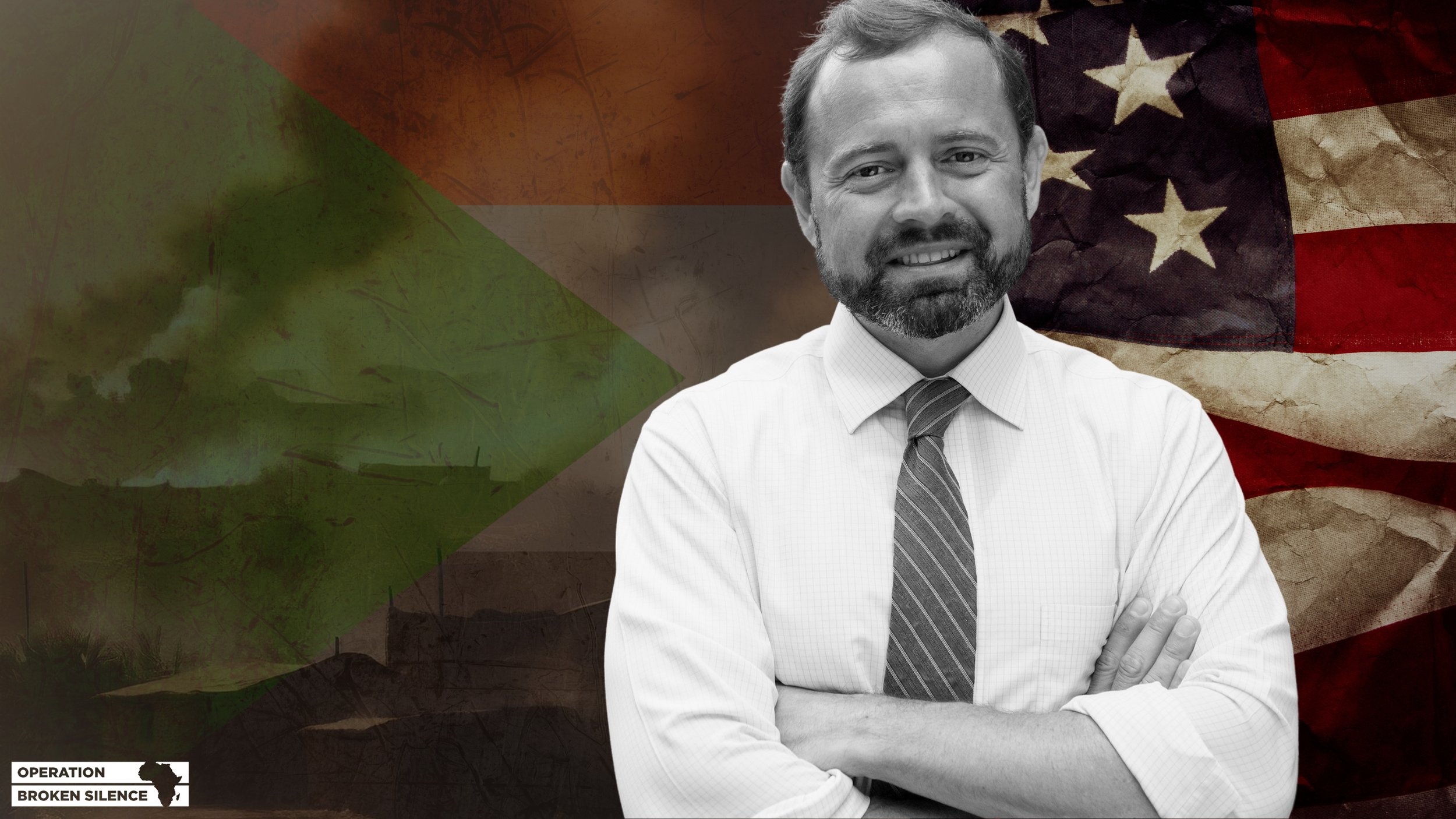
The U.S. State Department has appointed former diplomat and Congressman Tom Perriello as Special Envoy for Sudan. Special Envoys are personal representatives appointed by the president or the secretary of state, often to deal with a crisis in a specific region or play a key leadership role on complex, multilateral issues.
Perriello’s appointment comes as U.S. Ambassador to Sudan John Godfrey exits his post. It appears the United States will leave that position unfilled for now. The American embassy in Khartoum remains shuttered due to the ongoing civil war between Sudan’s army and the paramilitary Rapid Support Forces (RSF).
From Secretary of State Antony Blinken’s announcement:
Wait, what’s happening in Sudan?
One of the worst armed conflicts and the largest humanitarian catastrophe in the world.
SEE OUR GUIDE ➡
Special Envoy Perriello will work to empower Sudanese civilian leaders and drive our engagement with partners in Africa, the Middle East, and the international community to forge a united approach to stop this senseless conflict, prevent further atrocities, and promote accountability for crimes already committed.
He re-joins the Department having previously served as the Special Envoy for the Great Lakes and the Democratic Republic of Congo and as the Special Representative for the second Quadrennial Diplomacy and Development Review. He also represented Virginia’s Fifth Congressional District. Special Envoy Perriello’s extensive experience with peace, security and transitional justice issues on the African continent and other parts of the world have established him as a leader in this critical work. As he takes on this important role, he’ll draw on his over two decades of experience working across the executive branch, the legislative branch, multilateral institutions, and NGOs.
U.S. Special Envoys are the norm for Sudan
The Biden Administration appointing a Special Envoy is more or less a return to normalcy for how the United States has approached Sudan. Previous administrations over the past three decades often leaned on a Special Envoy to spearhead diplomacy. Ambassador Godfrey was the first U.S. Ambassador to Sudan in 25 years, making his posting a diplomatic anomaly.
Now, 18 months since he first walked into the U.S. embassy in Khartoum, Sudan is careening toward complete collapse as generals battle for control of a citizenry that does not want military rule. This is no fault of Ambassador Godfrey. As we noted at the time of his appointment, the prospect of war was already looming when he entered the job. Sudan was not a top priority of the U.S. government at the time either. It took nearly six months for the U.S. Senate just to confirm Godfrey as the U.S. ambassador to Sudan.
As the civil war in Sudan has spiraled over the past ten months, the silence of senior U.S. government officials and the chaotic international diplomacy to stem the killing has been truly mind-boggling. Multiple, unorganized rounds of peace talks led by various countries and organizations have failed to secure a ceasefire or improve humanitarian aid access. The current crisis requires a much more coherent international response, but the U.S. has largely failed to play its traditional role of coordinating and overseeing global efforts to silence the guns.
A challenging environment
The appointment of Tom Perriello to Special Envoy will hopefully bring some order to the chaos of the international response, but this move is no silver bullet. He comes into his role facing difficult political realities both at home and abroad.
If President Biden loses his reelection bid later this year, the Special Envoy position will likely disappear altogether as Perriello is a political appointee. Sadly, there are no signs that a potential Trump Administration will take a passing interest in Sudan. Congressional Republicans also aren’t thrilled with how the Biden Administration went about appointing a Special Envoy. Their primary concern, that this appointment is temporary in nature, has real merit considering the fractious state of U.S. politics.
But the most urgent need Perriello must address is consolidating American resources in fending off the numerous threats unfolding against the Sudanese people, including famine. The U.S. government has considerable regional resources it can bring to bear; however, with no embassy staff in country and the U.S. Agency for International Development’s (USAID) Sudan team currently operating out of Kenya, the structure of American power with regards to Sudan has been weakened.
This problem of drifting into being spread thin can be overcome, especially if the Special Envoy works closely with USAID Administrator Samantha Power, who has often been the lone senior U.S. official sounding the alarm about the tragedy unfolding in Sudan.
Since Special Envoy Perriello will be unable to cultivate relationships with ordinary Sudanese in the war zones, it would be wise for him to visit refugee and survivor communities. If peace and democracy can still be achieved in Sudan, listening to the extraordinary stories and concerns of ordinary Sudanese is the only place to begin.
See Ambassador Power’s remarks beginning at 4:41.
And this, of course, really is just the beginning. American policy toward Sudan is stuck in neutral and has too broad an emphasis. The dark shadows of famine and new frontlines creep deeper into the country by the hour. It’s past time for American policy to get proactive and very practical. Choking off the flow of weapons into Sudan can help. Delivering even limited aid where it can be delivered isn’t nothing, and finding creative ways to pressure and punish those who are putting up roadblocks is necessary.
Special Envoy Perriello can push U.S. policy into a more energetic stance that saves lives and shows the Sudanese they are not alone. Only time will tell if he can see through a needed course correction. For his part, the Special Envoy seems eager to get to work.
The crisis unfolding in Sudan is now the most dangerous and destructive humanitarian catastrophe in the world. Nearly 25 million Sudanese —roughly half the country— are in urgent need of humanitarian assistance. Over 9 million Sudanese have been internally-displaced and over 1.5 million more have fled Sudan altogether. And nearly 20 million children can no longer attend school.
Our Sudanese partners are struggling as the war spreads and needs skyrocket. Your generosity will help them serve the most vulnerable in this time of tremendous need.
$1,000 - Fully funds one classroom at Endure Primary School in Yida Refugee Camp for half a semester.
$500 - Delivers food to Darfuri genocide survivors who have fled to South Sudan.
$250 - Provides a daily breakfast to 10 children for an entire month in Adré refugee camp, where many Darfuri genocide survivors now live.
$100 - Supports the monthly work of a sexual assault counselor in Zamzam displacement camp in North Darfur, Sudan.
$50 - Helps repair classrooms in Yida damaged by seasonal rains and provide for general maintenance.
Join Miles For Sudan | Donate Stock or Crypto
Operation Broken Silence is a registered 501(c)(3) organization. Your donations are tax-deductible within the guidelines of U.S. law.
Shareables
Short statements you can share online and with others. Simply copy and paste.
Share Our Posts: Instagram Stories | Threads | Facebook | LinkedIn
The U.S. State Department has appointed former diplomat and Congressman Tom Perriello to the position of Special Envoy for Sudan. https://operationbrokensilence.org/blog/us-announces-special-envoy-for-sudan
Sudan is careening toward complete collapse as generals battle for control of a citizenry that does not want military rule. A new Special Envoy may be able to help. https://operationbrokensilence.org/blog/us-announces-special-envoy-for-sudan
The appointment of Tom Perriello to Special Envoy will hopefully bring some order to the chaos of the international response, but this move is no silver bullet. He comes into his role facing difficult political realities both at home and abroad. https://operationbrokensilence.org/blog/us-announces-special-envoy-for-sudan

Specter of ethnic killing looms in Sudan’s Nuba Mountains
After ten months of brutal warfare in Sudan, the weight of armed conflict and ethnic mass killing are bearing down on frontline areas of the southern Nuba Mountains.
After ten months of brutal warfare in Sudan, the weight of armed conflict and ethnic mass killing are bearing down more heavily on frontline areas of the southern Nuba Mountains, one of the least known regions of the country.
Sudan has been in a state of extreme civil war since April 2023, when the military regime fractured into two groups fighting for control. The economy and over 70% of the country’s healthcare system has collapsed. Famine is a growing threat. Nearly 25 million Sudanese —roughly half the country— are already in need of some form of humanitarian aid. Sudan is now the largest humanitarian catastrophe on the planet.
The situation in the Nuba Mountains has its own local complexities. Before we get to recent events here, we want to offer some background on the area.
About Nuba
The Nuba Mountains are in South Kordofan state in southern Sudan. This is where our primary Sudanese partners work.
Several dozen African tribal groups living here can trace their beautiful history here back more than 2,000 years. Roughly 1.3 million Christian, Muslim, and traditionalist Nuba people live in harmony.
The Nuba have survived two genocidal wars over the last thirty years by the military regime in Khartoum. Today, the mountains are functionally autonomous underneath an indigenous Nuba armed resistance force.

Map: Location of Nuba Mountains. (Operation Broken Silence)
Who is fighting?
There are three groups of armed actors in the Nuba region:
Sudan People’s Liberation Movement-North (SPLM-N) - Nuba armed resistance force of African ethnicity controlling much of the mountains.
Sudan Armed Forces (SAF) - Sudan’s official military that includes the army, air force, and navy and militia allies.
Rapid Support Forces (RSF) - a regional Arab paramilitary outfit created in Darfur by a previous national regime and militia allies.
The main combatants in Sudan’s civil war (SAF and RSF) used to be allies and have fought together against the Nuba people in the past. The SPLM-N has remained neutral in the war.

Photo: Nuba SPLM-N soldiers on patrol near the southern frontlines of the mountains. (Operation Broken Silence)
Becoming a safe haven against the rising RSF threat
When SAF and RSF ended their alliance and went to war with each other in April 2023, the Nuba Mountains became one of the few safe areas of the country. The Nuba SPLM-N have remained neutral in the SAF-RSF war after having fought off both forces repeatedly in the 2010s. Local Nuba officials estimate that over 900,000 Sudanese have fled into the mountains over the last 10 months, putting significant humanitarian strains on the region.
Most areas of the Nuba Mountains remain calm today, but there are worrying signs this could change in the near future.
Fighting erupted between SAF and the Nuba SPLM-N in June 2023. Combat was sporadic and limited to the west and northwest. SAF controls the state capital of Kadugli and some of Dilling further north. The Nuba SPLM-N controls much of the road in between the two cities and has a strong presence near Kadugli and in some of Dilling’s neighborhoods.
Since December, fighting between the two groups has reduced significantly as the RSF’s presence grows to the west and north. The RSF controls Dibebad in the far-northwest and has overrun a string of other smaller SAF outposts in the north.
Reported frontlines as of February 2024. Click or tap to zoom. (Operation Broken Silence)
A sizable portion of the RSF fighting force adheres to an extremely racist, Arab-supremacist ideology, which states that Darfur’s historic African tribal groups must be cleansed from the region and all other Sudanese Arabs are inferior. This ideology has spread with the RSF into other parts of Sudan throughout the war, leading to RSF fighters executing SAF prisoners of war and civilians, raping and pillaging, and robbing countless more people they deem inferior.
Dilling is home to Arab and African Nuba tribes. There is deep concern that if the predominantly Arab RSF seizes Dilling, they will perpetrate a large-scale ethnic massacre of the African Nuba, similar to massacres they have committed in Darfur. The RSF has tried to arm some citizens in the city who fear SAF, leading one resident to describe the RSF as trying to “start a race war.” SAF has also armed militias in Dilling in response.
In early January, a large RSF force moving south from Dibebad attacked Dilling. Eyewitnesses report that Nuba SPLM-N reinforcements promptly entered the city and, together with SAF and small numbers of local militia, pushed the RSF out after intense fighting. Thousands of Dilling’s citizens were displaced, but a large-scale ethnic massacre was likely narrowly avoided. RSF commander Hussein Barshom —whose men have been seen committing war crimes elsewhere in Sudan— was spotted in Dilling during the incursion.
It is unclear if the Nuba and SAF have some sort of agreement, but the reduced fighting between the two sides and their joint counteroffensive against the RSF in Dilling shows just how much their commanders fear the RSF expanding further into the area.
Where the RSF goes, ethnic killing follows
Events over the past several weeks in and around Dilling show that further RSF expansion into the Nuba region will be disastrous for human life. The growing RSF shadow is raising ethnic tensions in the region.
Shortly after the RSF attacked another SAF garrison in early January, a rumor spread through SAF ranks in Dilling that some army soldiers had “enabled” the RSF to gain ground. A rash of extreme violence broke out that included brutality between SAF officers and soldiers. Some of SAF’s 54th Infantry Brigade split along ethnic lines —SAF is a fairly diverse fighting force, although racism exists in its ranks— and engaged in killing, torture, and mutilation of dead bodies. A SAF soldier accused of being a traitor suffered what was described by an eyewitness as a “crucifixion,” with his throat being slit and his body strung up upside down.

Photo: Children living in Yida Refugee Camp, just south of the Nuba Mountains. (Operation Broken Silence)
These events occurred only a few days before the RSF attacked Dilling. Following the RSF retreat a few days later, two more dead bodies were found hanging in the same area. Eyewitnesses reported that the corpses were janjaweed, a pejorative term associated with the RSF. Who displayed the bodies in such a gruesome way is unknown, but it seems to be a warning to the RSF to stay out of Dilling, or else.
Based on the RSF atrocities we have seen in Darfur and rising tensions in the Nuba Mountains, it is evident that any larger conflict involving the RSF in the Nuba region would be catastrophic for the local population. Where the RSF goes, ethnic killing follows.
RSF command-and-control issues and racism may spark a wider conflict
Small-scale RSF attacks have expanded to other SAF garrisons around the Nuba Mountains throughout 2024, a sign that the RSF’s reach is growing in the area. RSF fighters are now pushing up against territory under control of the SPLM-N and the Nuba people who the RSF have a history of persecuting.
Some direct fighting between the RSF and Nuba SPLM-N has already taken place. The town of Habila —east of Dilling— and the army garrison stationed there was overrun by the RSF in early January, forcing roughly 15,000 people to flee into Nuba SPLM-N territory. The Nuba SPLM-N responded on February 9 by driving the RSF out of the town and securing some of the surrounding areas. Many people have chosen not to return home for now as they fear the RSF could strike again. Armed Arab and Nuba tribesmen are now fighting near Habila, risking further escalation between the Nuba SPLM-N and RSF if one group decides to enter the fray.
It does appear that neither SAF nor RSF brass want to fight a full-scale war with the Nuba SPLM-N, at least right now. Picking a fight with the most powerful and well-trained rebel force in Sudan on their home turf would be a strategically dumb move considering how stretched both forces are across multiple frontline areas in the country. The Nuba SPLM-N has been aggressive in defending their own borders and people, including seizing limited amounts of new territory to widen buffer zones, but has also shown little interest in joining the civil war outright.

Photo: The southern foothills of the Nuba Mountains during the rainy season. The rocky terrain gives a natural defensive advantage to the Nuba SPLM-N. (Operation Broken Silence)
Still, this should provide no comfort. Both SAF and RSF have command-and-control issues, especially when it comes to more rural areas where telecommunications are minimal or absent. As the RSF is largely on the offensive in the region, their command-and-control challenges are the most alarming. All it takes is a few too many accidental RSF incursions into Nuba SPLM-N territory —or RSF troops giving into their ethnic killing proclivities— to force the Nuba SPLM-N into a broader war with the RSF.
Preparing for a larger crisis
As the RSF shadow over frontline areas of the Nuba Mountains spreads, both SAF and the Nuba SPLM-N appear to be preparing for a larger confrontation with the RSF.
SAF is responding by beefing up its presence in the state capital of Kadugli, which will likely become a primary target for the RSF as their presence grows in the region. The 14th Division headquarters there recently received fresh reinforcements and supplies, but their hold on the city still seems less than sure. There is chatter that SAF is going to try to reopen the highway between Kadugli and Dilling, which is nominally under control of the Nuba SPLM-N. Considering the growing RSF threat and the SAF command-and-control issues seen in Dilling, it is unclear if SAF is in a position to try to take this critical road.
Meanwhile, Nuba SPLM-N commanders are keeping wary eyes on their increasingly frayed borders. A large number of Nuba forces have been forward-deployed since the war began 10 months ago. Besides ongoing minor adjustments at the local level, the Nuba SPLM-N seems largely prepared to fight against the RSF at a larger scale if it comes to that. The indigenous force is much more cohesive and restrained than SAF and the RSF are, which is perhaps one of the main reasons why a larger conflict hasn’t sparked yet.
At this point it also seems unlikely the Nuba SPLM-N will sit back and allow the RSF to take Dilling or Kadugli if SAF falls in either city. Both are home to sizable populations of ethnic Nuba who would almost certainly be massacred by an invading RSF force.
Whatever the future brings, the threat of RSF atrocities being unleashed on the Nuba people is real and urgent. At the time of this posting, RSF paramilitaries are rampaging in Kartala near Habila —the town recently liberated by the Nuba SPLM-N— and Jebel El Dayir. Survivors fleeing into nearby areas held by the Nuba SPLM-N report more than 60 people have already been killed and that over a dozen villages have been burned to the ground.
The blaring sirens of genocide being heard in Darfur are now being heard in the Nuba Mountains. We’ve seen this story before. We know how it ends. We must do what we can to help.
We’re a nonprofit organization with over a decade of experience working alongside Sudanese heroes. Our primary education partner is in the Nuba Mountains region and is struggling to meet the growing needs around them. Your generosity will help them bring education to those most in need.
$1,000: Support one teacher for an entire semester.
$750: Deliver three new chalkboards to classrooms.
$500: Provide additional materials and extra pay to teachers who are working with students to prepare them for national exams.
$250: Give pencils, notebooks and other supplies to 40 students in Yida Refugee Camp.
$100: Helps repair classrooms damaged by seasonal rains and provide for general maintenance.
$50: Give soccer balls and other sporting equipment to students.
Checks can be make payable to Operation Broken Silence and mailed to PO Box 770900 Memphis, TN 38177-0900.
Join Miles For Sudan | Donate Stock or Crypto
Operation Broken Silence is a registered 501(c)(3) organization. Your donations are tax-deductible within the guidelines of U.S. law.
Shareables
Short statements you can share online and with others. Simply copy and paste.
Share To Instagram Stories | Repost on Threads | Share On Facebook | Repost On LinkedIn
After ten months of brutal warfare in Sudan, the weight of armed conflict and ethnic mass killing are bearing down more heavily on frontline areas of the southern Nuba Mountains, one of the least known regions of the country. https://operationbrokensilence.org/blog/specter-of-ethnic-killing-looms-in-nuba-mountains
Events over the past several weeks in and around Dilling show that further RSF expansion into the Nuba Mountains region will be disastrous for human life. https://operationbrokensilence.org/blog/specter-of-ethnic-killing-looms-in-nuba-mountains
When SAF and RSF ended their alliance and went to war with each other in April 2023, the Nuba Mountains became one of the few safe areas of the country. This could change in the near future. https://operationbrokensilence.org/blog/specter-of-ethnic-killing-looms-in-nuba-mountains
The blaring sirens of genocide being heard in Darfur are now being heard in the Nuba Mountains. We’ve seen this story before. We know how it ends. We must do what we can to help. https://operationbrokensilence.org/blog/specter-of-ethnic-killing-looms-in-nuba-mountains