
News & Updates
Check out the latest from Sudan and our movement
Backing Sudan’s civilians is the only option left
Sudan is changing in the fires of war and the fires of civil revolution. The latter must prevail, and diplomacy must change.
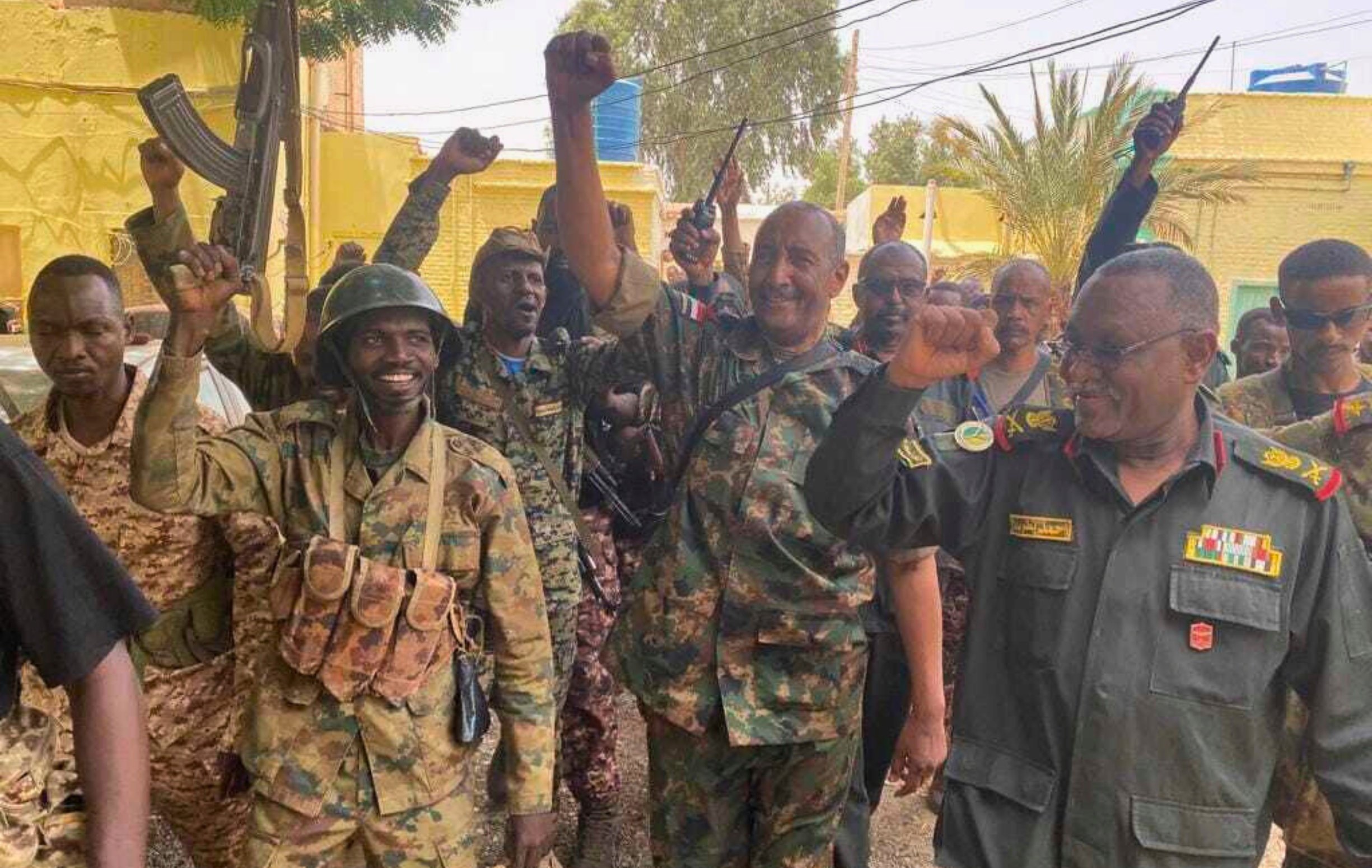
In this photo released by the Sudanese Army on Tuesday, May 30, 2023, General Abdel-Fattah Burhan visits his soldiers on the Khartoum battlefield. (Sudanese Army via AP)
It took mere days of war in Sudan to show that standard diplomatic efforts to contain the violence would fail. And fail they have, miserably so. Since fighting broke out between army and paramilitary forces in April, negotiations have come and gone, humanitarian conditions have surged past emergency thresholds, and the abhorrent generals seem more hellbent on killing anyone who gets in their way with each passing week.
Current efforts are faltering and will likely collapse soon. IGAD, the East African security and economic bloc of which Sudan is a member, recently proposed a ceasefire and peace initiative that would see armed peacekeepers deployed to Khartoum. A Sudanese army general responded with the threat “I swear to god, not one of them would make it back.” Representatives from both sides are now in Jeddah to try to re-start talks, but the prevailing attitude on the frontlines is this one of extreme violence.
Millions of ordinary Sudanese citizens —the beautiful, diverse lifeblood of the country— face grim choices that compound by the hour. Life in Sudan was already difficult before this war due to the regime’s incompetence, but it is now becoming impossible. Where food can be found, prices have skyrocketed. Access to medical care is so degraded that entire swaths of the population have no healthcare access at all. And all estimated counts of the dead and wounded likely represent a fraction of reality.
A darkness beyond civil war and humanitarian catastrophe
The past few weeks have proven this crisis is exceedingly more dangerous than the “backsliding” and “risk of full-blown civil war and humanitarian crisis” narratives that abound in intergovernmental bodies and minimal media coverage. The fighting between General Abdel Fattah al-Burhan’s Sudan Armed Forces (SAF) and General Mohamed Hamdan Dagolo’s paramilitary Rapid Support Forces (RSF) has unlocked a darkness that tears at the very fabric of humanity itself.

Images of bloodied piles of dead soldiers and the destruction of basic services in Khartoum continue surfacing on social media, and the country’s once populous capital is being abandoned en masse by her citizenry.
In the long-oppressed Darfur region, genocidal massacres of the Masalit people group by the RSF and their local allies abound, with other ethnic minorities across the oppressed periphery staring down the barrel of extermination. Tribal leaders in West Darfur say over 10,000 of their people have already been killed in the region. Satellite imagery shows entire neighborhoods and villages have been burned to the ground. The authoritative Sudan Conflict Observatory has found evidence of the “targeted destruction of at least 26 communities” by the RSF up to July 10, the cutoff date of their last reporting period more than two weeks ago.
Meanwhile, in the defiant southern borderlands, the highly-restrained rebel force in the Nuba Mountains are done watching the SAF-RSF war encroach on their borders. Seeing and hearing the blaring sirens of genocide in Darfur, Nuba rebels have ended their fragile ceasefire and launched early offensive operations, hoping against hope to keep the fate of Darfur from reaching their own ethnic minority population.
Violence has reached Blue Nile in the southeast. El Obied in the center…the list goes on. But Darfur continues to be the harbinger of what is to come. On July 23, one of our Sudanese partners sent us chilling video of an Arab militiaman using a knife to behead a Masalit civilian. We don’t know the name of the individual or exact location of this barbaric crime, just that he was murdered recently in West Darfur. What we do know is countless stories of gruesome killings like this lurk beneath the surface of an already hellish war.
There is another war being waged in Sudan. It is a war against the very lifeblood of the country. Neither side is innocent, far from it, but the RSF especially are out to finish the genocide in Darfur they began years ago as the Janjaweed. All lines of civil war, humanitarian crisis, ethnic cleansing and even genocide are in the rearview mirror. The real question that looms before Sudan’s besieged citizenry is if human life can even be sustained in large parts of the country in the years ahead.
The depraved generals and their unruly chains of command have given their answer in the shoveled soil of mass graves: no, there cannot be. Letting them have the final word would be an atrocity in and of itself.

What can be done?
Nearly a decade ago, I visited a Nuba refugee camp in South Sudan to interview survivors of a now previous war and, alongside one of our Sudanese partners, lay the groundwork for our thriving childhood education program. One survivor I spoke with —a man who narrowly escaped what sounded like a SAF chemical weapons attack— turned the tables and asked me: why does the world only negotiate with the devil? Do they not know we are here and ready to help?
These are fair questions that bear heavy salience today. Negotiating with war criminals in hopes they’ll silence the guns may be the status quo of international diplomacy toward Sudan, but it has never worked in the past and it won’t work today. So what can be done if the traditional approach is going to keep failing?
Back in May, during failed talks in Jeddah, both the SAF and RSF delegations signed a short-term ceasefire and humanitarian agreement. The world focused on both sides immediately breaching the agreement. Few noticed that the SAF and RSF delegations signed the agreement only for themselves. Neither side claimed to represent the Sudanese government at the negotiating table.
In fact, no one has represented the Sudanese government since the war began. This is further evidence that Sudan is on the road to becoming a failed state, a terrifying proposition with devastating global consequences. But it’s also a window of opportunity to flip the table.
There’s only one player in Sudan that has any authority to claim it speaks for the Sudanese government: the people. Both the SAF and RSF have willingly signed away their authority, authority they should have never had in the first place. The most helpful thing the world’s diplomats can do now is to circumvent the army and Rapid Support Forces and start working directly with civilian leaders.
There are many ways to do this. For starters, American policymakers need to get their act together and fully step into the global coordinating role the U.S. often plays in crisis situations. Working in tandem with allies and other countries, international diplomats can help coalesce and support civilian leaders and activist networks in Sudan to jump-start an interim government led entirely by civilians. This is not a novel concept. As Sudan expert Alex de Waal recently noted:
That’s more than a symbolic act. They could take charge of the financial institutions of the state and bring material leverage to the table. Similar things have happened elsewhere. In Libya, for example, the central bank remained independent of the warring militias, receiving dollars from the sale of oil and paying salaries across the country. Sudan’s independent banking institutions would need technical, diplomatic and financial support from the U.S. and other donors. This would be a test of Washington’s seriousness in halting state collapse and supporting democracy.
Making such a move would also open up a wide range of possibilities beyond the traditional toolkit of sanctions, humanitarian aid, and conflict monitoring, all of which are still important.
If outside powers are going to continue pushing the SAF and RSF toward negotiations, civilians would now outrank both factions at the international level and have their long-needed voice seated permanently at the head of the table with the backing of world leaders, and the generals downgraded to the junior position. An interim government could seize control of Sudan’s financial institutions, work with international partners to get outside human rights monitors on the ground, and coordinate evacuations of high-risk areas. With urgency, civilian leaders could shutter the corrupt and inept Sudan Humanitarian Aid Commission and work directly with international agencies such as the World Food Programme and USAID to get more services and relief into parts of the country faster through resistance committees, local activists, and other unofficial channels.
These are just a few of the many, many possibilities a civilian government operating both inside and outside Sudan could pursue. The sense of powerlessness in the international community is a choice. The status quo does not have to remain the status quo.
This move is no silver bullet. No such solution exists. There’s always the risk that a major international effort could damage the legitimacy of Sudan’s civilian resistance. But that risk pales in comparison to the death and destruction that lies ahead. This path should only be taken with civilian leaders at the helm, after their vision for a path forward is clear and has buy-in from the horizontal activist networks on the street. They held the line against the army and RSF when the world failed. They’ve earned the world’s trust. It’s high time to give it to them.
Violence would undoubtedly continue; however, if the United States, Sudan’s neighbors, other African countries operating underneath the African Union, and the Europeans threw the real weight they have behind an interim civilian government and sustained the effort, countless lives could be saved. It would take some creativity, but such collective action could be used to degrade the ability of the SAF and RSF to wage war over time. At the very least, the Sudanese people would have some of the tangible international support they deserve. They would know they are not alone. That’s not nothing.
Sudan is changing in the fires of war and the fires of civil revolution. The latter must prevail. This moment calls for the diplomatic approach to change, too. Some will question if this path is wise. Maybe they are right too, but new thinking and bold action is needed either way. The status quo in international diplomacy is unsustainable. It is propping up the very generals who are burning the country to the ground.
It’s past time to hang the war criminals out to dry and lock arms with the people who actually care about the fate of Sudan: her resilient people. Smart people inside and outside Sudan can argue about how to best do that, but anything less is insanity.
We Need Your Help
In our 12 years of working alongside Sudanese heroes, we’ve never seen anything like this. Extreme violence is spreading across Sudan. Entire cities and villages are being destroyed. Program costs are skyrocketing.
Our Sudanese partners are struggling. They need 100 of us to start giving at least $50/month to help people escape the genocide in Darfur, continue their critical education and healthcare work in the Nuba Mountains, and reach more people in need. ⚡️This is a big matching campaign!⚡️ Every new monthly gift will be matched by a generous private donor for 3 months.

The Renewal is our passionate family of monthly givers supporting Sudanese teachers and healthcare professionals. When we match their grit with a monthly financial commitment, we become an unstoppable force for good.
You’ll receive updates from our partners, a donation receipt each month, and an annual giving statement. Giving monthly also comes with perks!
Operation Broken Silence is a registered 501(c)(3) nonprofit organization. Your donations are tax-deductible within the guidelines of U.S. law.
OTHER WAYS TO HELP
Make a check payable to Operation Broken Silence and mail to PO Box 770900 Memphis, TN 38177-0900
Start a fundraising page and ask friends and family to give

Our Sudanese partners have a long road ahead and need all the help they can get.
Let’s each play our small part in giving them the best chance for real, lasting change. I hope you will join me in starting your monthly gift today.
Onward,
Mark C. Hackett
Executive Director
War clouds loom over Sudan's Nuba Mountains
The multi-year ceasefire between Khartoum and the Nuba Mountains is collapsing, threatening to spread the war between former regime security forces to yet another region of the country.

Nuba fighters in Kauda, Nuba Mountains of Sudan. (AP Photo/Nariman El-Mofty)
The multi-year ceasefire between Khartoum and the Nuba Mountains region of Sudan is at risk of collapsing, threatening to spread the war between former regime security forces to yet another region of the country.
Sudan has not had a functioning government since mid-April, when the army and paramilitary Rapid Support Forces (RSF) began fighting each other for control of the country. The extreme violence has been most severe in Khartoum and the oppressed western Darfur region, where thousands of people have been murdered in a RSF-backed genocide in El-Geneina. More than 2.5 million Sudanese have been displaced across the country.

Rising Tensions in Nuba
The Nuba Mountains are nestled in South Kordofan state in southern Sudan. This is the area where most of our Sudanese partners work. The mountains are practically autonomous after decades of armed resistance to military rule. Several dozen African tribal groups who live here can trace their beautiful history back more than 2,000 years. The 1.3 million Christian, Muslim, and traditionalist Nuba people live mostly in harmony together.
The Sudanese army and their paramilitary allies committed a genocide against the Nuba people in the 1990s and another genocidal war in the 2010s. A fragile ceasefire has been in place since 2016. Today, the area is governed by the Sudan People’s Liberation Movement-North (SPLM-N), the powerful Nuba armed resistance force that developed during previous wars.
Tensions have been escalating between Khartoum and the Nuba Mountains since October 2021, when the army and RSF overthrew Sudan’s transitional government. When the regime collapsed in April and the army-RSF war began in earnest, the region was largely spared from the extreme violence. The SPLM-N has reported that nearly 200,000 displaced Sudanese have fled into the Nuba Mountains since early May.
Clashes near the western front
Insecurity in western South Kordofan has worsened over the past few weeks as fighting between the army and RSF encroached on the area. The highway between Dilling and the state capital of Kadugli further south has fallen prey to bandits and small RSF units. This not only poses a danger to thousands of people using the road to flee heavy fighting in Khartoum and El-Obied further north, but it has also disrupted trade and contributed to growing economic scarcity in southern Sudan. Pricing of basic goods in Dilling have almost doubled.
Reported fighting as of June 23, 2023. Click or tap to zoom.
On June 8, the Nuba government began mobilizing its forces after skirmishes broke out between army soldiers and SPLM-N fighters near Kadugli. The cause of the fighting is unknown, but the SPLM-N quickly gained the upper hand and took three small villages outside the state capitol. The situation has deteriorated since.
Over the past several days fighting has fanned out along the route between Dilling and Kadugli. The SPLM-N claims to control most of the road. On Wednesday Nuba fighters reached the outskirts of Dilling and briefly breached army defenses, seizing the central police station before withdrawing. No civilian casualties were reported during the SPLM-N’s time in the city, but a number of casualties were reported among the army.
Complicating this situation is the arrival of a larger RSF force in the area. RSF paramilitaries plundered the town of Debebad north of Dilling a week ago and raped three women. They also defeated army units at Teiba military base near Dilling and are consolidating their control, likely before moving south against Dilling.
On Thursday, the RSF also exchanged artillery fire with the army near Kadugli, the latter of which has reportedly abandoned their base in the south of the city and sent in warplanes to bomb nearby SPLM-N and RSF positions. Residents said the army had deployed reinforcements in the city Thursday as SPLM-N units approached from the south and east and the RSF from the west and northwest.
A Three-sided War?
There is still no reported aerial bombardment in areas of the Nuba Mountains firmly under SPLM-N control, which was the cause of much of the humanitarian crisis during the last war in the 2010s. Prices of basic goods are going up though, and there is rising concern the ceasefire will not be restarted.
It’s doubtful the army can commit military assets to a war against the Nuba Mountains right now, especially considering they remain engaged in heavy fighting with the RSF in Darfur and Khartoum. It’s also unclear how long the army can hold Kadugli and Dilling against both the SPLM-N and RSF. If the army begins to lose ground in South Kordofan, there is a high chance the Nuba SPLM-N and RSF will be fighting each other as well as the army in the near future. The army is more or less a buffer between the two right now due to their base and resupply locations.
What the RSF aims to achieve in South Kordofan is a mystery. Perhaps it’s to knock out two army garrisons or solidify another supply route to El Obied and Khartoum further north. Whatever the RSF commanders’ decision to enter South Kordofan now is, it seems unlikely the SPLM-N will allow the paramilitaries to get too close to their borders, especially considering the RSF’s atrocious history in the area.
So, where is all this heading? While the army and RSF’s past wars in the region have been incredibly destructive, none went as planned or achieved their ultimate aims. The Nuba SPLM-N is better armed, controls more territory, and is more entrenched in their mountain strongholds than ever before. Time will tell if the western front expands further and for how long. Until then, our Sudanese partners’ worries and the costs for just about everything are going up.
We Need Your Help
In our 12 years of working alongside Sudanese heroes, we’ve never seen anything like this. Extreme violence is spreading across Sudan. Entire cities and villages are being destroyed. Program costs are skyrocketing.
Our Sudanese partners are struggling. They need 100 of us to start giving at least $50/month to continue their critical education and healthcare work and reach more people in need. ⚡️This is a big matching campaign!⚡️ Every new monthly gift will be matched by a generous private donor for 3 months.
The Renewal is our passionate family of monthly givers supporting Sudanese teachers and healthcare professionals. When we match their grit with a monthly financial commitment, we become an unstoppable force for good.
98 more monthly givers are needed.
You’ll receive updates from our partners, a donation receipt each month, and an annual giving statement. Giving monthly also comes with perks!
Operation Broken Silence is a registered 501(c)(3) nonprofit organization. Your donations are tax-deductible within the guidelines of U.S. law.
OTHER WAYS TO HELP
Make a check payable to Operation Broken Silence and mail it to PO Box 770900 Memphis, TN 38177-0900
Start a fundraising page and ask friends and family to give
Nuba Education Update - June 2023
Get the latest news from our education program in the Nuba Mountains and Yida Refugee Camp.
Friends and supporters,
We have some wonderful updates from the teachers who serve in our education program below, but we first need to acknowledge what a difficult time this is for the Sudanese people.
Two months after regime security forces began fighting each other across the country, the situation in the Nuba Mountains and Yida Refugee Camp remains tense, but peaceful. The schools we support have not been hit by the escalating conflict; however, program expenses are going up due to the war. Fuel has doubled in price and the costs of some basic supplies are up roughly 50%. We’re beginning to see small numbers of refugee families arriving in Yida from elsewhere in Sudan, too.
Can you make a quick donation to these heroes of education? Your gift will be matched by a private donor! The schools need to stay fully operational despite rising costs, and it is critical to support change makers on the ground in this moment of severe crisis.
$200 provides a teacher's salary for one month.
$150 helps deliver new chalkboards and repair classrooms.
$100 provides pencils, notebooks, and other basic school supplies.
$50 gives the gift of sport by providing nets, balls, and more.
OTHER WAYS TO HELP
Make personal and DAF checks payable to Operation Broken Silence, write Education in the memo line, and mail to P.O. Box 770900 Memphis, TN, 38177-0900.
Start a fundraising page and ask friends to give!
Join The Renewal, our monthly giving family that never stops fighting for change.
Operation Broken Silence is a registered 501(c)3 nonprofit organization. Your donation is tax-deductible within the guidelines of U.S. law.
Okay, now for the updates.
In 2015, Operation Broken Silence began funding four Sudanese teachers in Yida Refugee Camp. They were giving lessons underneath a tree with a broken chalkboard. They had no textbooks, paper, pencils…nothing.
With your support, their small but bold effort has blossomed into the Endure Primary and Renewal Secondary Schools. 24 Nuba teachers work here every day —supported by an additional 6 staff— and they run the show, not us. Over 750 students are currently in their classrooms every week. Endure Primary is the top performing elementary school in the region and a treasured possession of the Nuba community. Renewal Secondary is the only fully-functioning high school in Yida. More than 10,000 children have been served by the school to date.
Operation Broken Silence is the only organization in the world supporting childhood education in Yida Refugee Camp. Beyond these schools, we support Yida’s only other secondary school, a national exam preparation program for all primary school students at other schools in Yida, and deliver classroom supplies to other schools in Yida and the Nuba Mountains. It’s been a busy, but fruitful year so far.
Amjuma’s Story
Amjuma was born in Yida Refugee Camp. Her family arrived in Yida nearly 9 years ago after the Sudanese government bombed their village. She has never seen her homeland, saying:
“My mother talks about home a lot but the people fighting in Sudan make her worried. We will stay here until it is quiet. I know Yida is not my true home.”
Today, as her family waits to return to the Nuba Mountains, Amjuma is enrolled at the Endure Primary School. She loves her teachers and the friends she has made here. Both provide a sense of normalcy in a time of great upheaval in Sudan.
“The teachers are always here before the students. They smile as we walk in every day. ‘Let’s prepare you to change our country!’ they say. I want to be a teacher one day. They can change our nation in ways the men with guns never will.”
Recent News
Schools In Yida. It’s been a bittersweet year as many families have departed Yida and returned to their villages in the Nuba Mountains. Attendance at Endure Primary is hovering at almost 500 students daily, while Renewal Secondary is holding steady at 260 students daily.

Repairs were recently completed in classrooms at Renewal Secondary that needed extra support. This included more weatherproofing, new roofs, and 3,000 new bricks made for replacement walls. This was made possible with some extra giving from our donors. The teachers and students thank you!
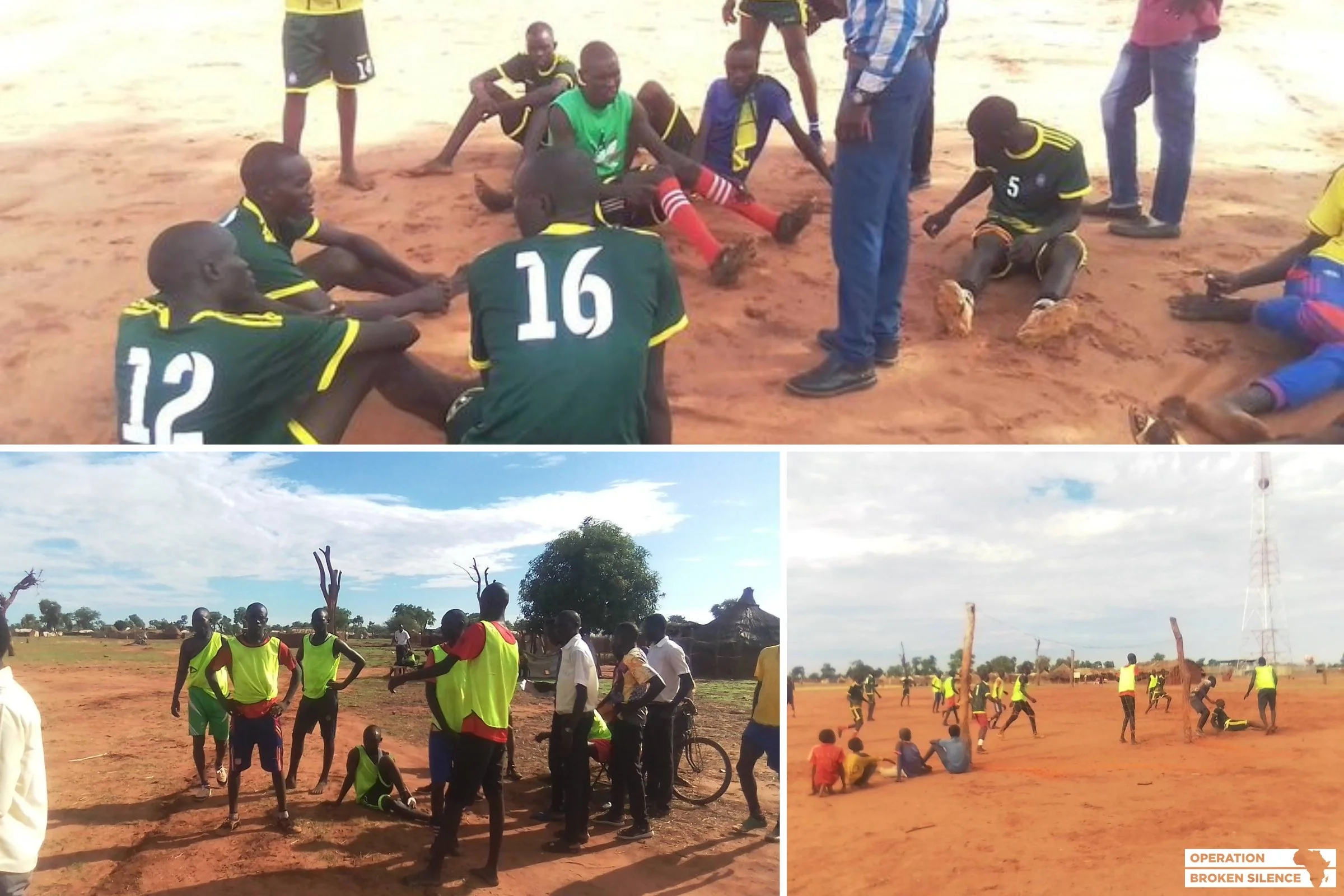
In May, the teachers at Renewal Secondary hosted another community-wide health awareness workshop for students, their parents, and close friends. This workshop covered basic sanitation practices and latrine-use. And annual sports activities have also kicked off at the schools! Here are a few photos from a recent soccer match.
Broader Education Support In Yida. Endure Primary School continues to serve as the central national exam preparation facility for primary students in Yida. The camp’s eight other primary schools receive support and resources annually for student test prep. This ancillary program has positively impacted nearly 700 additional students this year!
The only other high school in Yida remains afloat with our support. Vision Secondary School was founded several years ago with pledges of support from other outside nonprofits and churches, none of which materialized. Sadly, this is but one chapter in a long history of unfulfilled promises to the Nuba people. This isn’t the first mess created by others that our Nuba education partner is having to clean up. Some of the teachers we support at Renewal Secondary are serving in classrooms at Vision to fill gaps left behind by Vision’s unpaid teachers who have since left. The temporary assistance we are providing is bringing much needed stability to students there.
Classroom Supply Delivery In Yida And Nuba. Our Nuba education partner is also delivering a limited amount of school supplies to other schools in Yida, most of which operate with little to no outside support as well.
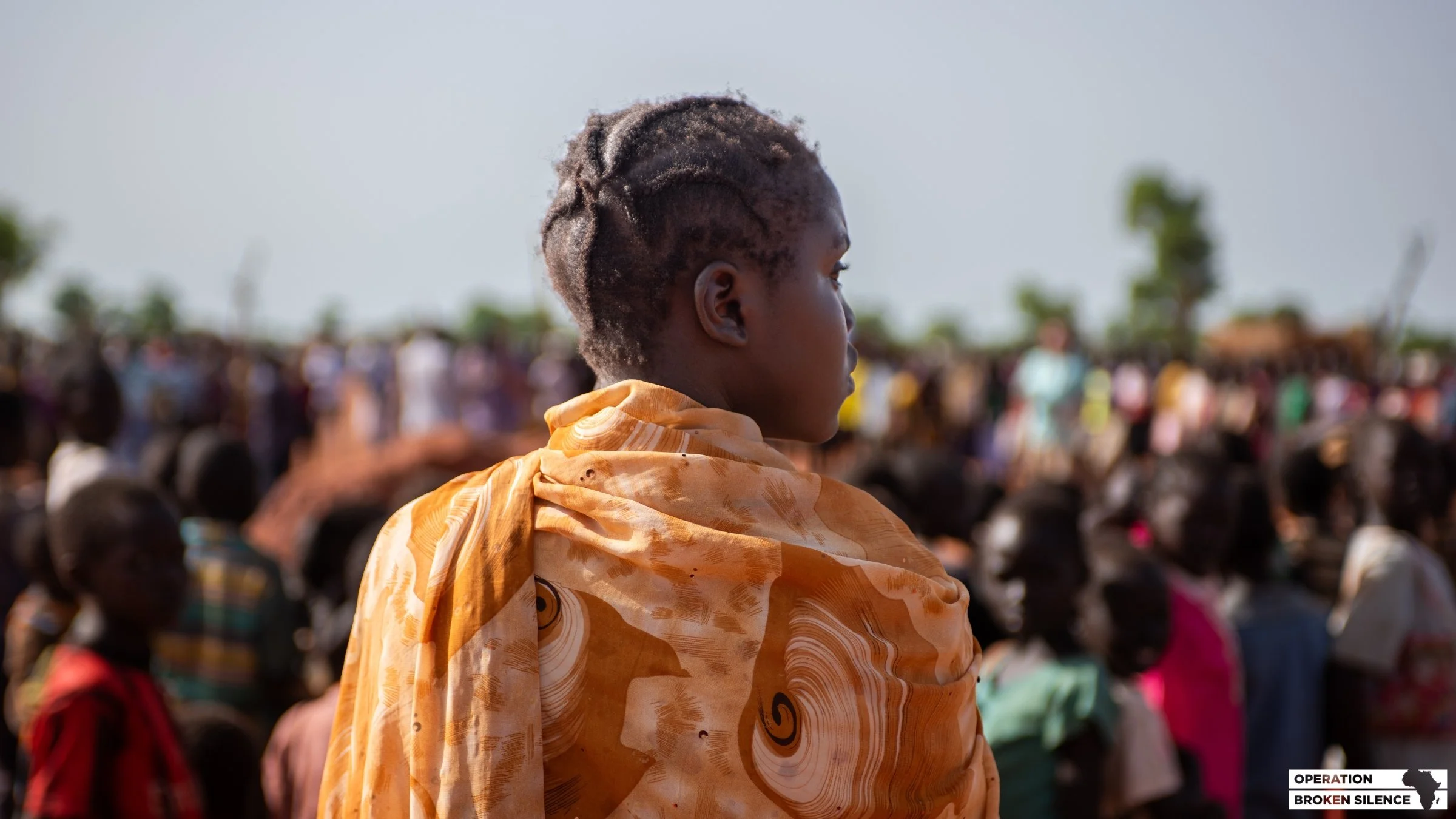
Photo: Students at the Endure Primary School in Yida Refugee Camp.
How You Can Help
Funding for the teachers and students remains an uphill battle due to the war in Ukraine, which is sucking up much of the attention of globally-minded donors. Rising costs coupled to fewer donations means our Nuba education partner is running on roughly 65% of the funding they need. The good news is that this is a problem you can help us solve.
The best way to help is to join The Renewal. This is our passionate family of monthly givers supporting teachers and kids in Yida. When we match their grit with a monthly financial commitment, we become an unstoppable force for good.
You’ll receive a donation receipt each month and an annual giving statement at the beginning of each year. Giving monthly also comes with perks!
Membership Perks
Members of The Renewal are the top supporters in our movement! When you join the family, you’ll receive:




The Renewal is a big deal around here.
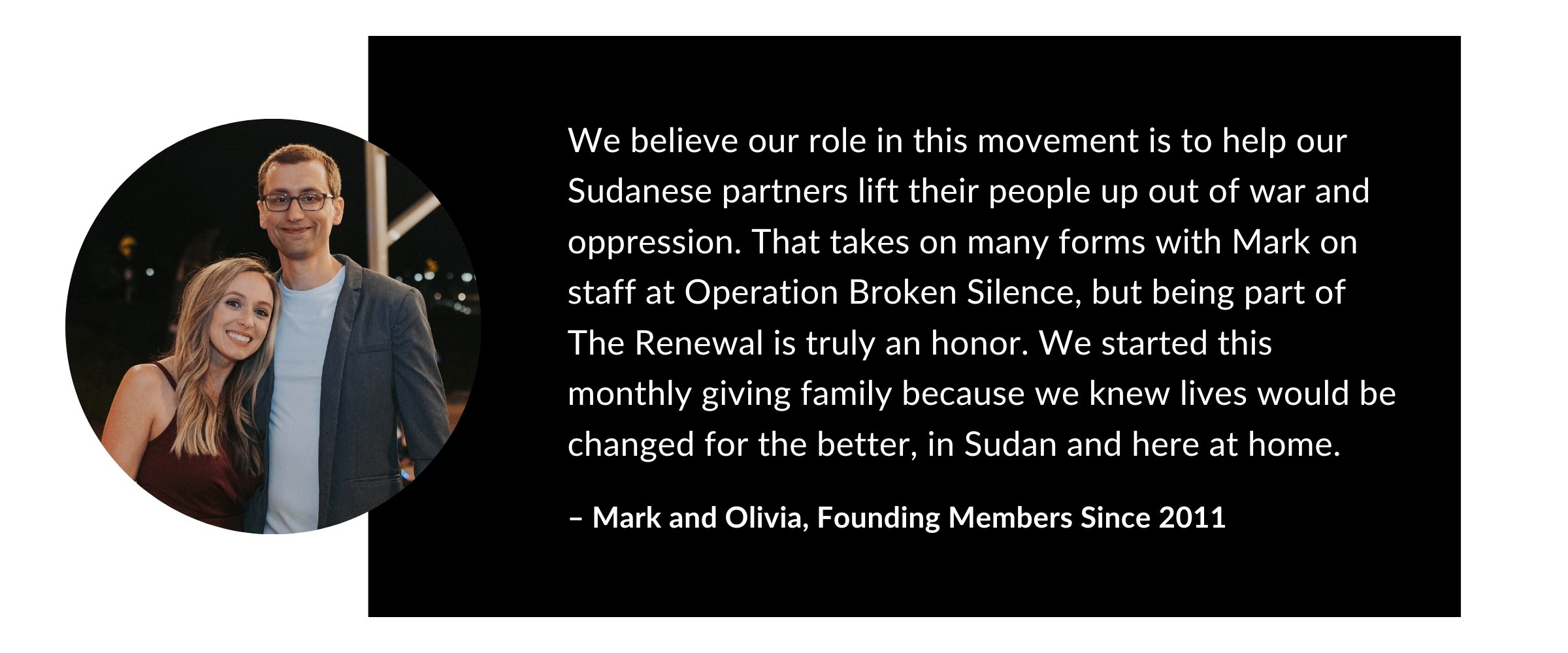
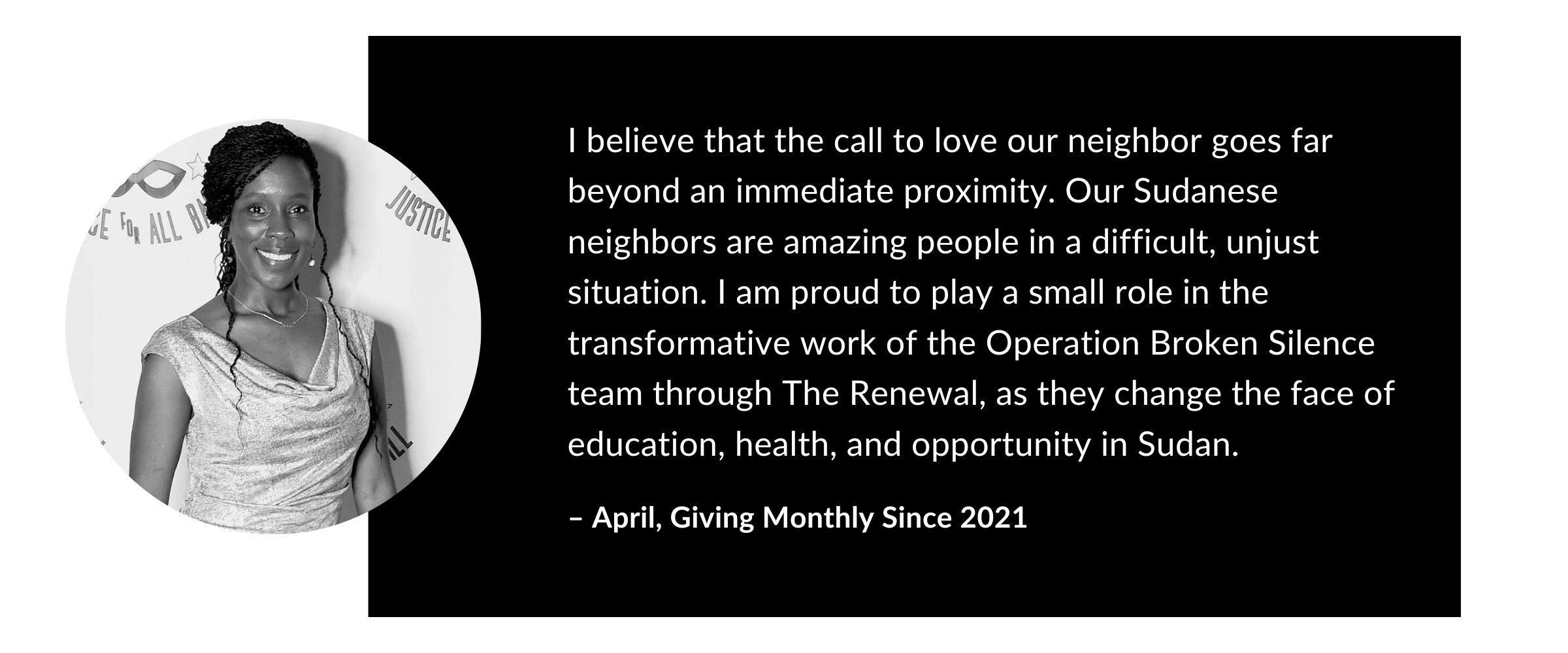
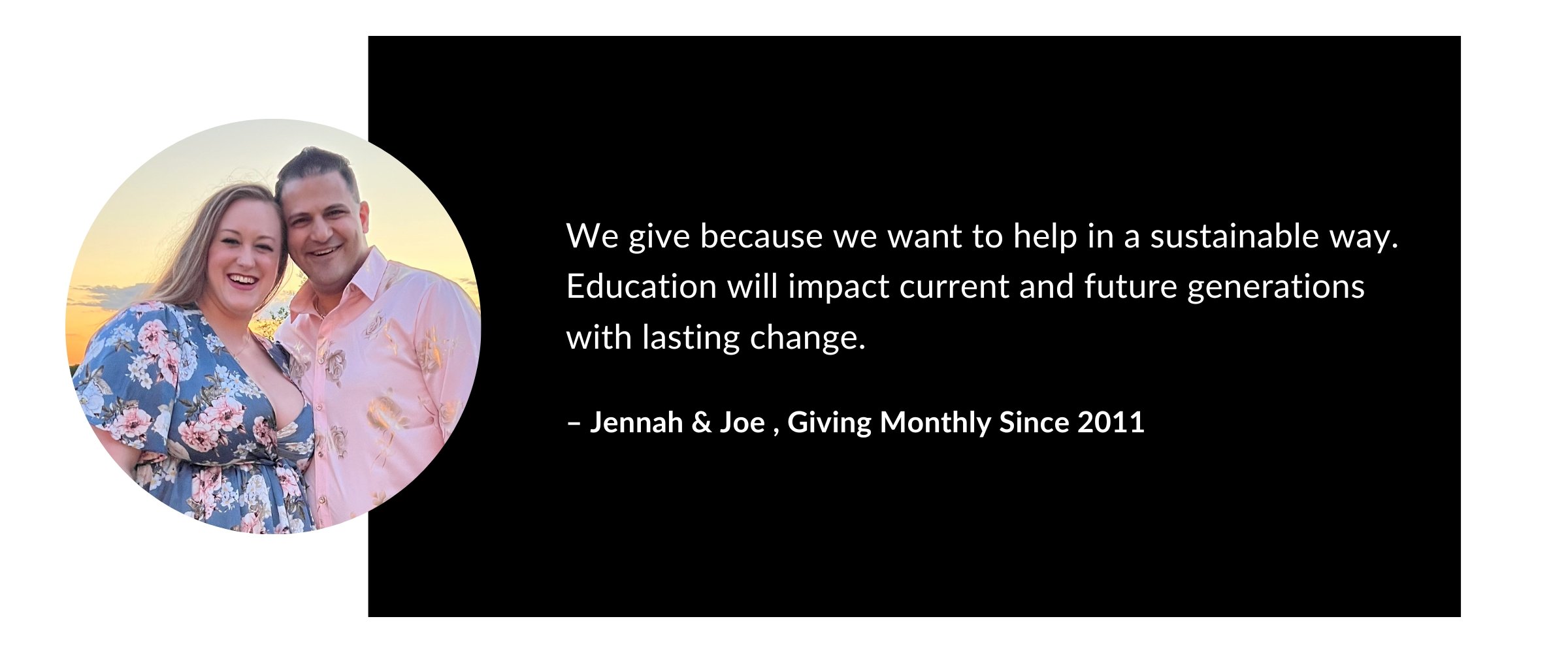
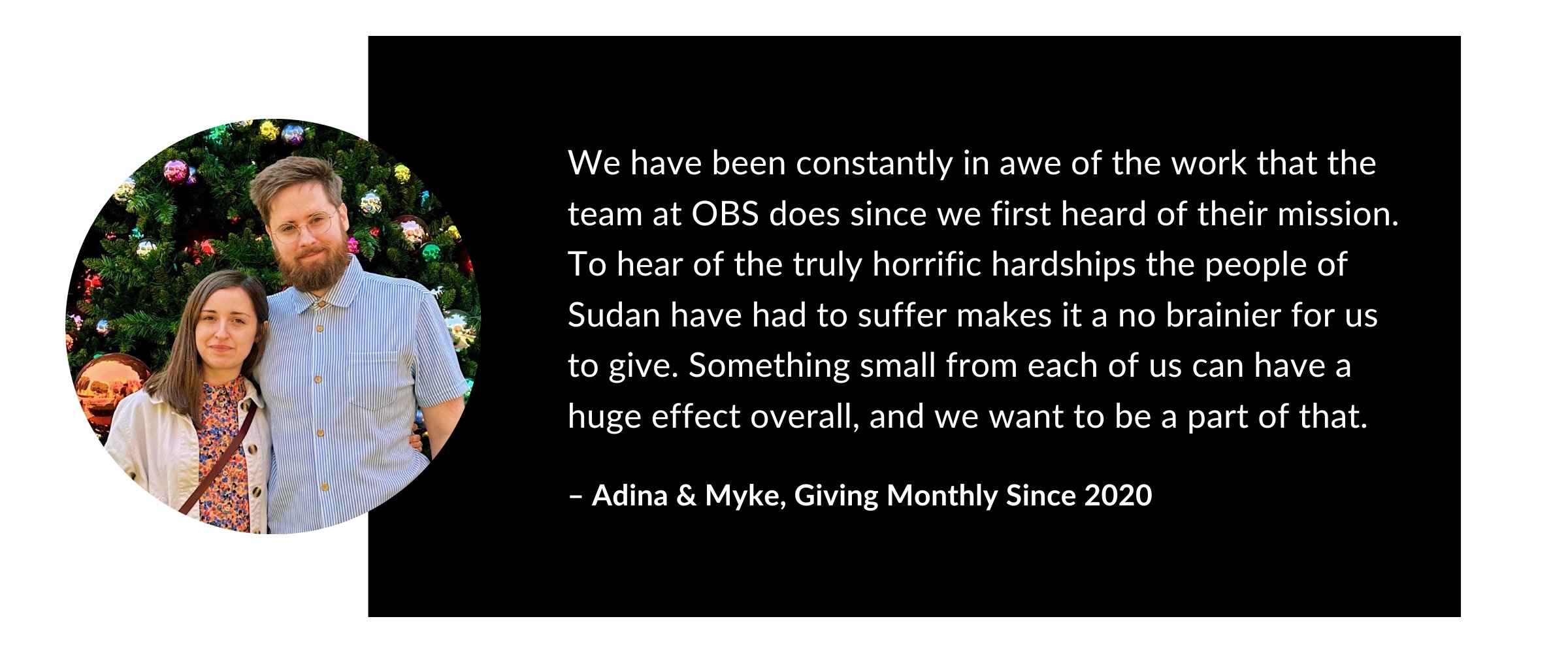
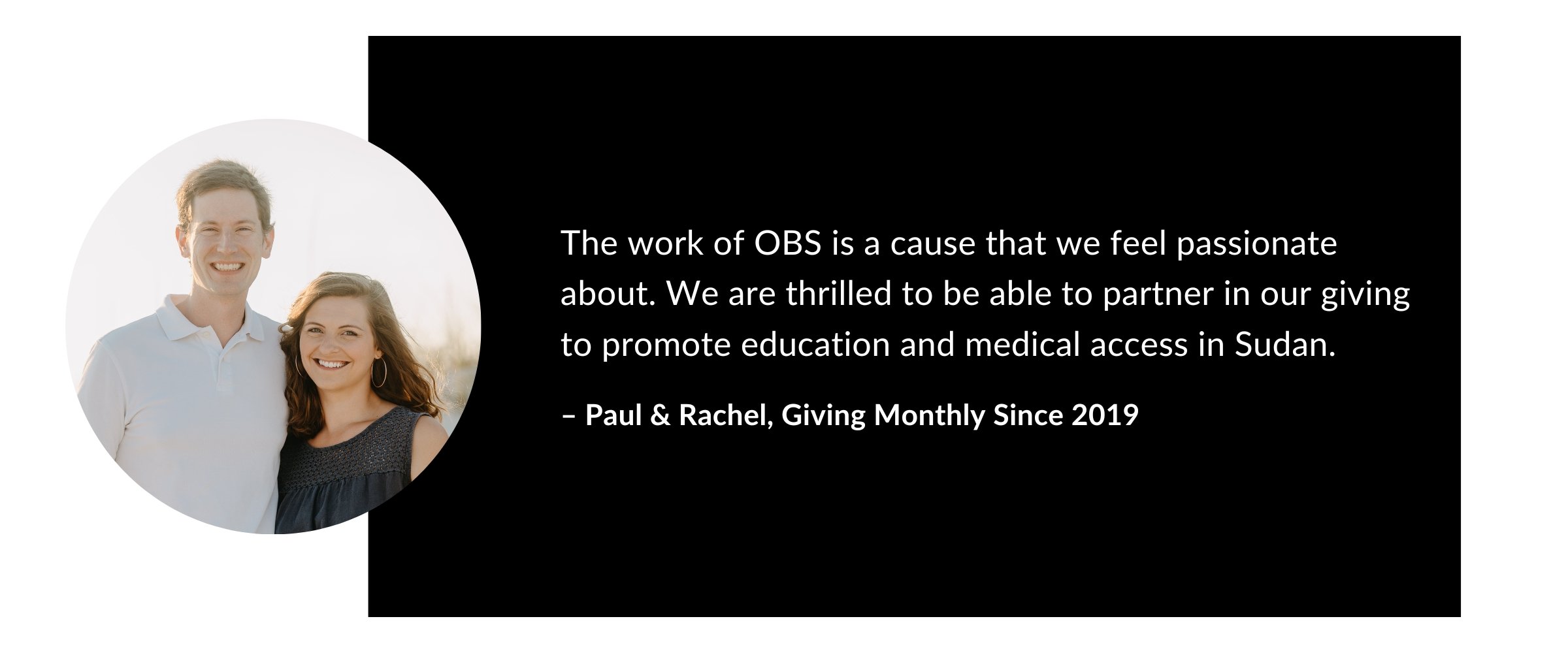
The Renewal giving family is sending tens of thousands of dollars to Nuba teachers every year. Will you join us?
What To Wear: Soirée For Sudan 2023
Not sure what to wear for the big night? We have you covered!
The 11th annual Soirée For Sudan is Saturday, October 7, 2023 at Crosstown Arts in Memphis, TN.
The evening is about the incredible 24 Nuba teachers at the Endure Primary and Renewal Secondary Schools in Yida Refugee Camp. It’s about the 900 students there who want to build a better Sudan. And it’s about generous supporters like you. If you haven’t gotten your tickets yet, now is the time!
Roaring 20s Theme
This was the theme of our 2018 gala and supporters have been asking to do it again ever since! You can tap or click on photos from that year’s event below to get an idea of what we mean by Roaring 20s. We’ve also included some descriptions you may find helpful.


Ladies, this was the era of the flapper! Think glitz and glam dresses and accessories. Try incorporating fringe, beading, gemstones, or feathers into your outfit. Beaded or feather headbands, long pearl necklaces, long gloves, and drop earrings are also some good ideas.
Gents, you can go as sophisticated as a three-piece suit or a bit less dressy with slacks, dress shirts with a snazzy tie or bow tie, and suspenders. A great idea for an accessory is a 1920s-style hat, such as a fedora with a wide brim or a homburg.

It’s hard to believe we’re celebrating 11 years of Soirée For Sudan. We’re looking forward to seeing all of you beautiful people Saturday, October 7 at Crosstown Arts!
If you have any questions, feel free to shoot us a quick message. Talk to you soon.
Cheers,
Anya & Mark
Senate Foreign Relations Committee holds hearing on Sudan
Watch the full hearing and read a quick summary to learn more.
This morning, the United States Senate Foreign Relations Committee held a full committee hearing on the catastrophe unfolding in Sudan.
We encourage you to watch the entire hearing, but we believe the exchange with Senator Cory Booker that begins at the 1:12:45 mark is worth honing in on specifically. These are the questions that should be asked and the points about Sudanese civil society needing to be centered in any process moving forward are critically important. You can also read several of our key takeaways below.
U.S. government diplomacy and actions
Secretary of State Antony Blinken has engaged in seven separate calls with Sudanese Generals Burhan and Hemeti —the two men responsible for the security meltdown— to negotiate multiple temporary ceasefires that have allowed for evacuations, some Sudanese civilians to escape high-risk areas, and the delivery of a limited amount of humanitarian aid.
Since Sunday, U.S. Assistant Secretary of State Molly Phee and U.S. Ambassador to Sudan John Godfrey have been engaged in pre-negotiations between the Sudan Armed Forces and Rapid Support Forces. Their immediate focus is securing a declaration on humanitarian principles and a more sustainable temporary ceasefire to pry open humanitarian access. If successful, they will push forward for expanded talks that aim to secure a permanent cessation of hostilities and a return to civilian-led governance in Sudan.
The State Department and U.S. military personnel have evacuated over 2,000 people from Sudan, including 1,300 U.S. citizens, diplomats, and local staff.
Following President Biden issuing an Executive Order on May 4, the U.S. government is moving forward with preparations to hold to account those responsible for this crisis through sanctions and other actions.
Ambassador John Godfrey and other US diplomats are actively speaking and working with NGOs and Sudanese civil society groups to try to meet immediate needs, as well as to find a path forward that truly places civilians in charge of the Sudanese government.
USAID’s assessment of the humanitarian situation and actions
The United States Agency for International Development (USAID) has confirmed that 70% of hospitals in conflict-affected areas have been knocked out of operation.
USAID estimates that over 3 million women and girls are at high-risk of gender-based violence by various regime security forces.
More than 19 million people could be food insecure in the next 3-6 months if fighting continues. That’s over 40% of Sudan’s entire population.
170,000 people have already fled to neighboring countries. Another 700,000+ have been internally-displaced by ongoing battles between regime security forces.
USAID Administrator Samantha Power has deployed a Disaster Assistance Response Team to the region to help coordinate large-scale relief efforts that will begin when a ceasefire sticks.
Port Sudan is firmly under the control of the Sudan Armed Forces. USAID and other regional and international actors are stockpiling humanitarian relief supplies there and off the coast that can be quickly delivered throughout the country when conditions permit.
Friends and supporters,
This time of extreme crisis is making the work of our Sudanese partners difficult. And basic program costs are rising due to the war; fuel alone has nearly doubled in price.
The military generals responsible for this violence have no vision for Sudan, only a vision for themselves that has led to the senseless deaths of countless people. Our Sudanese partners don’t know when this will end, but their vision for a healthy and whole Sudan remains resolute. This is the way. They need our help in this time of severe crisis.
A generous private donor is responding to these urgent needs by matching all donations to our Sudanese partners, up to $15,000 total. When you donate, so do they. Give now to double your impact!
Operation Broken Silence is a registered 501(c)3 nonprofit organization. Your donation is tax-deductible within the guidelines of U.S. law.
OTHER WAYS TO GIVE
Make a check payable to Operation Broken Silence and mail it to P.O. Box 770900 Memphis, TN 38177-0900
Operation Broken Silence is a 501(c)3 tax-exempt organization and your donation is tax-deductible within the guidelines of U.S. law. To claim a donation as a deduction on your U.S. taxes, please keep your email donation receipt as your official record.
Biden Administration moves toward sanctions concerning Sudan
This morning, the Biden Administration announced it is moving toward imposing sanctions on persons who are destabilizing Sudan.
This morning, the Biden Administration announced it is moving toward imposing sanctions on persons who are destabilizing Sudan and undermining the country’s democratic transition.
The announcement comes nearly three weeks after the country’s official military and the paramilitary Rapid Support Forces (RSF) plunged Sudan into the nightmare scenario we have long feared. Heavy urban fighting between the two sides in Khartoum has since spilled out to many other parts of the country.
Conservative estimates state that nearly 600 people have been killed and over 5,000 more wounded, with more than 100,000 people having fled the country the last few weeks. Dozens of hospitals and healthcare facilities have been attacked. The UN estimates another 860,000 more people will flee the country in the coming weeks.

A Sudanese fighter jet flies over the Khartoum battlefield in April 2023.
After expressing his support for the Sudanese people, President Biden said:
“Since the earliest moments of this conflict, the United States has facilitated the safe departure of thousands of people –Americans and others– by land, sea, and air and conducted intensive negotiations to de-escalate violence. Our diplomatic efforts to urge all parties to end the military conflict and allow unhindered humanitarian access continue, as do our efforts to assist those remaining Americans, including by providing them information on exit options. The United States is already responding to this unfolding humanitarian crisis and stands ready to support enhanced humanitarian assistance when conditions allow.
The United States stands with the people of Sudan—and we are acting to support their commitment to a future of peace and opportunity. Today, I issued a new Executive Order that expands U.S. authorities to respond to the violence that began on April 15 with sanctions that hold individuals responsible for threatening the peace, security, and stability of Sudan; undermining Sudan’s democratic transition; using violence against civilians; or committing serious human rights abuses.”
In a letter to Congressional leadership concerning his executive order, the President added:
“I find that the situation in Sudan, including the military’s seizure of power in October 2021 and the outbreak of inter-service fighting in April 2023, constitutes an unusual and extraordinary threat to the national security and foreign policy of the United States.”
Friends and supporters,
This time of extreme crisis is making the work of our Sudanese partners more difficult. Our Sudanese partners don’t know when this will end, but their vision for a healthy Sudan remains resolute. And they once again need our help in a time of severe crisis.
A generous private donor is responding to these urgent needs by matching all donations to our Sudanese partners, up to $15,000 total. Give now to double your impact!
Operation Broken Silence is a registered 501(c)3 nonprofit organization. Your donation is tax-deductible within the guidelines of U.S. law.
Onward,
Mark C. Hackett
Executive Director
What Sanctions Mean & More
President Biden’s full executive order can be viewed here. In summary, the EO aims to impose sanctions on the following types of people:
Persons determined to have engaged or attempted to engage in actions or policies that threaten the peace, security, or stability of Sudan
Persons engaged in actions or policies that undermine the formation or operation of a civilian transitional government, Sudan’s transition to democracy, or a future democratically elected government
Persons engaged in actions or policies that undermine democratic processes or institutions in Sudan
Persons engaged in censorship or other actions or policies that limit the exercise of freedoms of expression, association, or peaceful assembly
Persons engaged in government corruption, serious human rights abuses, or the targeting of women, children, or any other civilians
Persons engaged in the obstruction of the activities of United Nations or attacks against United Nations missions in Sudan
The US Treasury Department’s Office of Foreign Assets Control is now enforcing the Executive Order. We expect to see announcements of specific sanctions in the coming weeks, whether fighting between regime security forces ends or not. As in the past, we want to note that sanctions on their own will not end this crisis. While important, sanctions are only one component of the U.S. government’s broader diplomacy in and around Sudan right now.
Speaking at a US Senate hearing today, the US Director of National Intelligence Avril Haines said:
“The fighting in Sudan between the Sudanese Armed Forces and the Rapid Support Forces (RSF) is, we assess, likely to be protracted as both sides believe that they can win militarily and have few incentives to come to the negotiating table…Both sides are seeking external sources of support, which, if successful, is likely to intensify the conflict and create a greater potential for spillover challenges in the region.”
The US Senate Foreign Relations Committee is scheduled to meet on Wednesday, May 10 to discuss “options for an effective policy response.”

About Us
Operation Broken Silence is building a global movement to empower the Sudanese people through innovative programs as a 501(c)(3) nonprofit organization.
We focus on empowering Sudanese change makers and their critical work. Learn more.
Donations are tax-deductible within the guidelines of U.S. law. Give here.